Workflow
Sales Stakeholder Map: An Enterprise Buying Committee Workflow
Build a source-linked map of confirmed stakeholders, uncertain roles, relationship owners, commitments, and next actions for a complex enterprise decision.
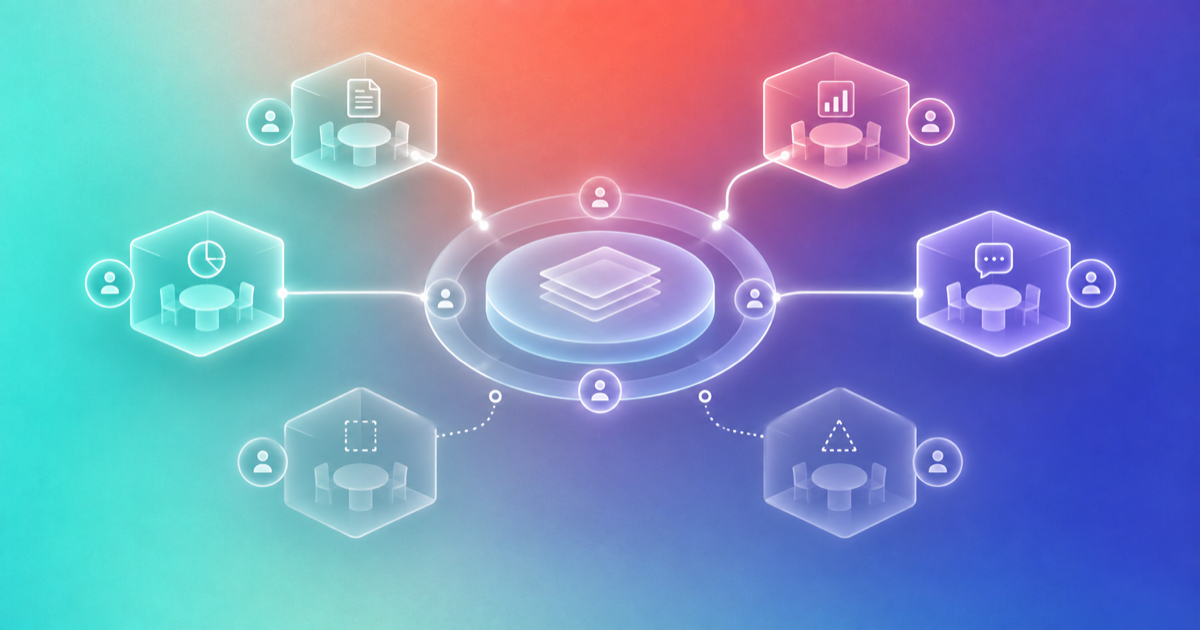
- Audience
- Founders, Sales and partnership teams, Relationship owners
- Products
- Aurora, CRM, Networks, Tasks
- Integrations
- Gmail, Outlook, Google Calendar
- Prerequisites
- A defined review scope, Permissioned relationship context, A named human owner, Current source evidence
- Expected outcome
- Build a source-linked map of confirmed stakeholders, uncertain roles, relationship owners, commitments, and next actions for a complex enterprise decision.
- Approval boundary
- Aurora can research, synthesize, and prepare supported work for map an Enterprise Buying Committee. A person verifies identity, evidence, permissions, and any consequential record change or external communication.
A sales stakeholder map shows who is involved in an enterprise decision, what each role needs to resolve, and who owns the next action. This workflow builds an evidence-linked buying-committee map from permitted account, meeting, email and document context. Separate customer-confirmed roles from hypotheses, record gaps as unknown, and respect the buyer's process before preparing outreach or introduction requests.
Use this workflow when a material purchase crosses business, technical, financial, legal, security, procurement, or executive stakeholders. Do not use it to label people from job titles alone or to contact additional stakeholders without respecting the customer's process.
Inputs
- The account and active opportunity record
- Known contacts and relationship owners
- Permitted meeting, email, and calendar context
- Public company and role information that can be verified
- Open questions, document requests, commitments, and dates
- The customer's stated evaluation and approval process
Buying-committee map
Create one row per person or confirmed decision role.
| Field | Record |
|---|---|
| Person and organization | Verified name, current role, and company |
| Stakeholder lens | Business owner, operator, champion, economic authority, technical evaluator, procurement, legal, security, executive sponsor, skeptic, or unknown |
| Status | Confirmed by the customer, supported by evidence, or unverified hypothesis |
| Relationship owner | Internal person accountable for the context |
| Evidence | Source message, meeting, public page, or document |
| Priority question | What must this stakeholder understand or decide? |
| Open commitment | What either side agreed to deliver |
| Next action | Specific owner and due date |
| Sharing boundary | What information may be used with this person |
One person may occupy several lenses. Do not force a complete committee when the buying process is genuinely smaller.
Run the workflow
- Open the account and reconcile every known contact against current identity and role evidence.
- Ask Aurora to gather the permitted account, meeting, message, task, and document context available through supported tools.
- Ask Aurora to separate confirmed stakeholders from hypotheses and cite the evidence for each proposed role.
- Compare the map with the customer's stated decision process. Record missing perspectives as unknown, not as named people.
- Inspect Finta Networks for relevant relationship paths only when an introduction could help. A path is not permission.
- Identify open questions and commitments by stakeholder. Assign an internal owner and date to each next action.
- Review any proposed CRM changes, tasks, drafts, or introduction requests before saving or sending them.
- Schedule the next account review and update the map only when new evidence arrives.
Aurora prompt
Review this account using the CRM record, permitted meetings, messages, tasks, and documents available to you. Build a buying-committee map that separates confirmed roles from hypotheses. Cite the evidence for every role, list open commitments by owner, and propose the smallest next action that reduces a real gap. Do not infer consent, budget, authority, sentiment, or relationship strength. Prepare drafts and proposed record changes for review before any consequential action.
Aurora can use supported Finta tools to inspect records, synthesize context, research public information, propose updates, prepare tasks or drafts, and complete eligible actions. The user remains responsible for identity, role, permission, disclosure, and external communication.
Worked example
A software company has completed two meetings with a prospective enterprise customer. The operations director is the primary contact, a security manager requested architecture details, and a vice president joined the second call. Nobody has confirmed who approves budget or contracts.
Aurora assembles the permitted notes and tasks. It proposes the operations director as the confirmed operator, the security manager as a confirmed evaluator, and the vice president as an unverified sponsor hypothesis. It identifies an overdue architecture summary and the absence of a documented commercial process.
The account owner corrects one role, assigns the document to the technical lead, and approves a follow-up question asking the operations director to explain the remaining evaluation and approval steps. The team does not contact the vice president through a possible network path until the current contact and relationship owner agree that doing so is appropriate.
Completion checks
- Every named person has a verified identity and source.
- Confirmed roles are visibly separate from hypotheses.
- The customer's stated process overrides generic role assumptions.
- Every active thread has an owner, purpose, and next action.
- Requested materials are current and approved for the recipient.
- Relationship paths remain permission leads, not automatic introductions.
- External messages and consequential CRM changes were reviewed.
Safe stops and limitations
Stop when identity, source quality, role, permission, or sharing boundaries are unclear. Communication data can be incomplete. Titles do not establish authority. A senior stakeholder may not be part of the decision. AI can merge people with similar names or overstate a tentative comment.
The map should help the team ask better questions, not manipulate or bypass the buyer.
Sources
- Finta CRM
- Finta Aurora
- Finta Networks
- Microsoft Dynamics 365 opportunity stakeholders
- Microsoft Relationship Sales
- Finta account relationship map template
Put the map to work
Keep the committee, evidence, and next actions together. Open Finta CRM and start with one material account.