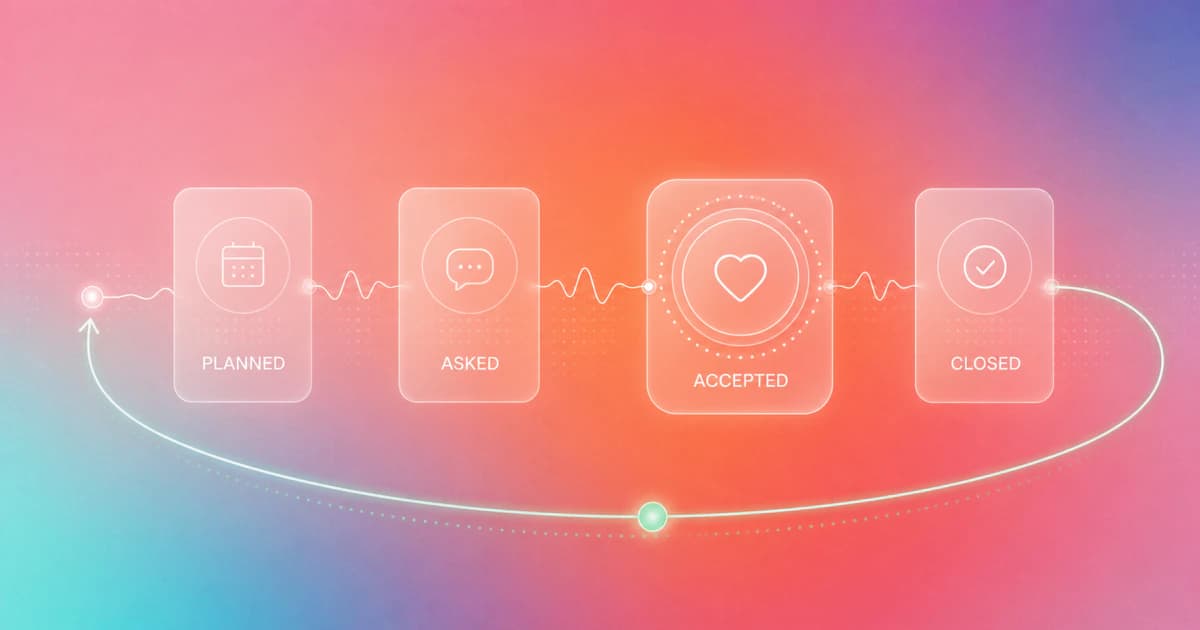
A warm introduction tracker should protect relationships, not turn them into a higher-volume outreach channel. The goal is to know what has actually been requested, what consent has been given, who owns the next action, and when to stop. A possible path is not a pending introduction. A connector’s yes is not the target’s yes. Treating those states as different keeps a fundraising team from repeating asks or following up as if a favor were an obligation.
The strongest default is a double opt-in: ask the connector whether they are comfortable helping, then let the connector confirm whether the target wants to meet. In The Double Opt-In Introduction, Fred Wilson describes the underlying principle as respect for both people’s time and a clear explanation of why the conversation could be valuable. Use that as a behavioral standard, not a legal rule or a reason to over-engineer every introduction.
Research updated: August 8, 2026. The tracker below is an editorial workflow. It does not prescribe a universal number of follow-ups or a universal waiting period. Connector context, fundraising urgency, and prior expectations should determine the review cadence.
Use a warm intro request hygiene ledger
The ledger is deliberately smaller than an investor CRM. It exists to manage the social work around one request. The relationship record can hold wider investor history, but the request ledger should make the permission and follow-through sequence visible at a glance.
| Field | Decision it supports | Example state |
|---|---|---|
| Target and rationale | Is this a precise, well-researched request? | Target matches the current raise hypothesis. |
| Potential connector | Who has firsthand enough context to assess the ask? | Existing investor who has worked with the target. |
| Relationship evidence | What makes this a plausible path rather than an assumption? | Direct collaboration, recent correspondence, or connector confirmation. |
| Request state | Has anyone actually consented? | Candidate path, connector asked, connector approved, target opted in, intro sent, paused, closed. |
| One owner | Who can send the next respectful update? | Named founder or fundraising lead. |
| Connector workload note | Would another request feel reasonable now? | Already reviewing two active requests, pause new asks. |
| Next review trigger | What event changes the decision? | Connector reply, target opt-in, investor update, or decision to close. |
| Close-the-loop result | What should the connector hear after the path resolves? | Meeting booked, not a fit, revisit later, or no response. |
Track the request lifecycle, not just the target
- Record a candidate path only after you can explain the rationale. Before asking someone for help, write why the target may be relevant to the company and why the particular connector is the right person to ask. If either answer is uncertain, return to research.
- Ask one person at a time when paths overlap. Several people may know the same target. Choose the clearest path first, especially if one relationship is active or context-rich. Parallel requests can create confusion for the target and pressure for the people involved.
- Make the connector’s choice explicit. The connector may approve, decline, suggest another route, ask to revisit later, or want more information. Each answer has a different next action. Do not convert silence into an implied yes.
- Distinguish connector approval from target opt-in. If the connector offers to make the introduction, the request remains incomplete until the target’s willingness is known. This is the difference between a relationship map and a real path.
- Keep one follow-up owner. The owner reviews the request at its stated trigger, prepares any update, and closes the item if no further action is appropriate. Other teammates can add context, but they should not independently nudge the same connector.
- Send a concise outcome update. When the path resolves, thank the connector and state the outcome at an appropriate level of detail. That lets the relationship holder understand that their time mattered without turning the introduction into a reporting burden.
Prevent the two habits that exhaust a network
Repeatedly asking the same connector without an outcome loop
A connector cannot tell whether prior introductions were useful if every request disappears into a spreadsheet. The close-the-loop field is not administrative decoration. It helps a founder learn which paths fit and shows the connector that the request was handled with care.
Counting every indirect connection as usable access
A social graph can surface hypotheses. It cannot show whether the relationship is current, whether the connector wants to help, or whether the target is open to the conversation. Keep those gaps visible. Finta’s Networks page describes relationship evidence and warm paths, while its public page also states that introductions remain explicit and are not sent automatically.
Where Finta fits
Use Finta Networks to review relationship evidence before making a request, and use Finta CRM to attach the approved path, investor context, and next action to the appropriate record. Fundraise OS is Finta’s public fundraising workflow page for pipeline, warm-intro templates, and follow-up work. Fund teams can pair the same request hygiene with the relationship practices described in Finta’s fund-manager guide.
Limitations and judgment calls
No tracker can determine whether a relationship should be used or whether a prospective investor is a fit. The reasonable number and timing of requests varies with the relationship, the connector’s preferences, and the importance of the opportunity. Never use a tracker to conceal repeated pressure, circulate confidential information without permission, or imply that a connector endorsed a company.
Continue the relationship intelligence playbook
- How to Coordinate Advisors, Existing Investors, and Connectors During a Raise
- Warm Introductions vs. Cold Investor Outreach: A Decision Framework
Editorial review and disclosure
Written and reviewed by Finta Editorial Team. Research updated August 8, 2026. This article provides general educational information about workflow design. It is not legal, tax, investment, regulatory, or placement-agent advice. Finta product links describe public product pages and are not evidence of customer outcomes.
Sources
- Fred Wilson, The Double Opt-In Introduction, accessed August 8, 2026.
- Finta, Relationship Strength and Warm Paths, accessed August 8, 2026.
- Finta, CRM and Inbox Intelligence, accessed August 8, 2026.
- Finta, Fundraise OS, accessed August 8, 2026.