A fundraising connector network works best when it is treated as a coordination problem, not a list of people who might know investors. The useful unit is a specific path: one target, one relationship holder, one reason the meeting could be useful, a clear consent state, and one next review. That structure lets a founder ask for help without creating duplicate requests, invisible obligations, or pressure on the people willing to make introductions.
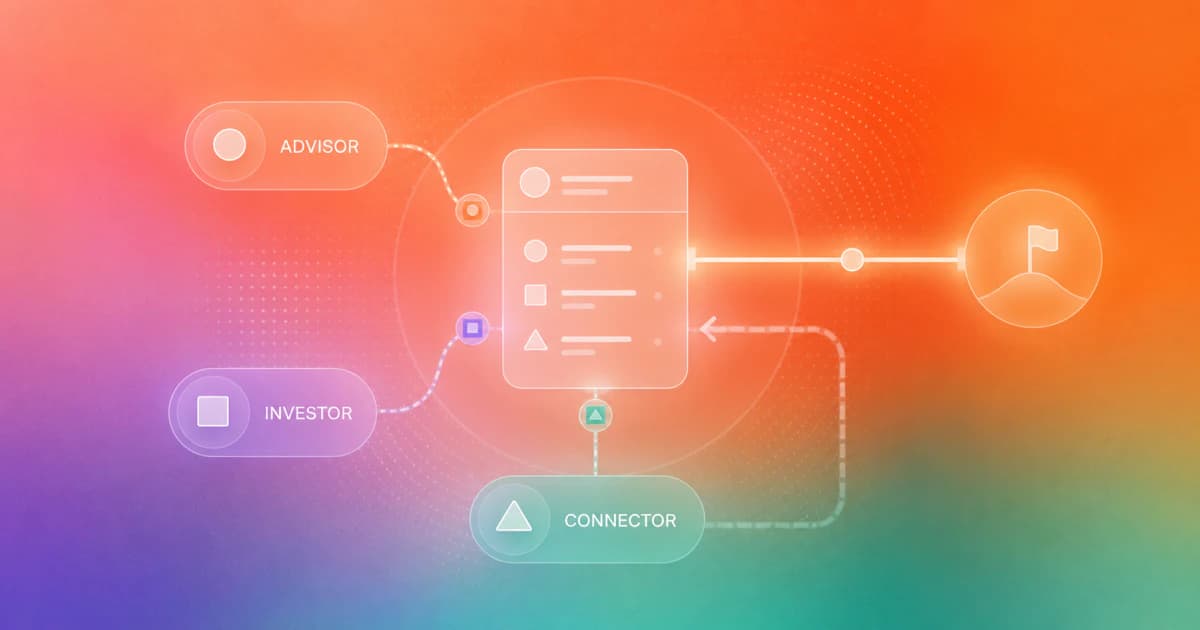
Start by separating three roles. An advisor may help qualify a target or sharpen the request. An existing investor may have a relevant relationship and a stake in the company’s process. A connector controls whether an introduction is appropriate. Those roles can overlap, but they should not be assumed to be interchangeable. A relationship signal is evidence to review, not permission to make an introduction. The practical norm behind a double opt-in is to ask both people before connecting them and explain why the conversation may be useful. That approach is described by investor Fred Wilson in The Double Opt-In Introduction.
Research updated: August 8, 2026. The framework below is a Finta Editorial Team operating model. It is designed to make the work reviewable. It is not a promise that every introduction will be accepted or a substitute for the connector’s judgment.
Build one connector coordination board
Use a shared board for active paths only. A long list of possible contacts creates false momentum. A short list with a named owner makes the next action visible and gives every connector a respectful way to say no, not now, or not through this channel.
| Field | What to record | Why it matters |
|---|---|---|
| Target and fundraising reason | The investor, fund, or person, plus the narrow reason to explore a conversation. | Prevents a connector from receiving a generic request. |
| Relationship holder | The person with firsthand context, not merely a name in a social graph. | Keeps the request with the person who can judge fit and timing. |
| Connector role | Advisor, existing investor, founder peer, customer, or other relationship holder. | Clarifies what help is being requested and what information may be relevant. |
| Request packet | A short forwardable note, company context, why this target, and the desired next step. | Makes it easier to assess the request without drafting from scratch. |
| Consent state | Not discussed, connector reviewing, target opted in, introduction sent, declined, paused, or closed. | Separates a possible path from an approved introduction. |
| Relationship owner and next review | One accountable person and a specific date or event that will trigger review. | Prevents several teammates from following up independently. |
| Outcome and close-the-loop note | Meeting booked, not a fit, revisit later, or no response, plus a thank-you or update. | Protects the connector relationship and preserves future context. |
Run a lightweight connector meeting
- Bring only decision-ready paths. For each path, prepare the target, the relationship holder, the reason for relevance, and one suggested next action. If the team cannot explain why the target is relevant, return the item to investor research rather than asking for an introduction.
- Ask the relationship holder for a judgment, not an obligation. A useful question is whether an introduction would be timely and mutually useful. The answer can be yes, no, later, or a different route. Record the answer rather than trying to convert a hesitation into a task.
- Use a forwardable request packet. Keep it concise: who the company is, what it is raising for, why the target may care, the exact ask, and any material that the connector may share. Do not include confidential information unless the connector has permission to share it.
- Keep the consent sequence explicit. A connector’s willingness to help is not the target’s acceptance. Ask the connector first, then let the connector seek the target’s opt-in when that is appropriate. Do not create an introduction automatically from a relationship map.
- Assign one follow-up owner. The owner watches the status, prepares the next step, and knows when to pause. Other teammates can contribute context, but they should not independently restart the same request.
- Close the loop with the connector. Share a short outcome once the path is resolved. A respectful close-out is part of the relationship, even when the answer is no or not now.
Use the board to resolve common coordination failures
Two people ask the same connector for the same target
Choose one request owner and combine the context. The connector should receive one coherent ask, not a visible internal handoff problem. If the two paths serve different fundraising hypotheses, make that distinction explicit before asking.
A connector knows the target but is unsure about the fit
Do not force an introduction. Ask whether the connector can help improve the target rationale, suggest a better person, or advise on timing. A well-documented no can be more valuable than an ambiguous path that stays open for weeks.
An existing investor wants to help broadly
Translate the offer into a small review queue with agreed criteria, not an unbounded contact list. Existing investors can be powerful connectors, but their relationships and reputation still deserve selective use.
Where Finta fits
Finta’s public Fundraise OS describes a workflow that includes an investor pipeline, warm-intro templates, and follow-up automations. Use Finta Networks to review available relationship evidence and warm paths, then keep the approved path and next step on the related CRM record. Teams raising a fund can also compare this workflow with Finta’s existing guide for fund managers. The product pages should be treated as the source of truth for current capabilities.
Limitations and judgment calls
This framework cannot establish whether a target is suitable, whether a connector has authority to share information, or whether an introduction will be welcome. It also should not be used to pressure someone who has not responded. Fundraising teams should apply their own confidentiality practices, agreements, and professional advice to each situation.
Continue the relationship intelligence playbook
- How to Track Warm Intro Requests Without Burning Out Your Network
- How to Build an Investor Relationship Map Before You Raise
Editorial review and disclosure
Written and reviewed by Finta Editorial Team. Research updated August 8, 2026. This article provides general educational information about fundraising workflow design. It is not legal, tax, investment, regulatory, or placement-agent advice. Finta product links describe public product pages and are not evidence of customer outcomes.
Sources
- Fred Wilson, The Double Opt-In Introduction, accessed August 8, 2026.
- Finta, Relationship Strength and Warm Paths, accessed August 8, 2026.
- Finta, CRM and Inbox Intelligence, accessed August 8, 2026.
- Finta, Fundraise OS, accessed August 8, 2026.