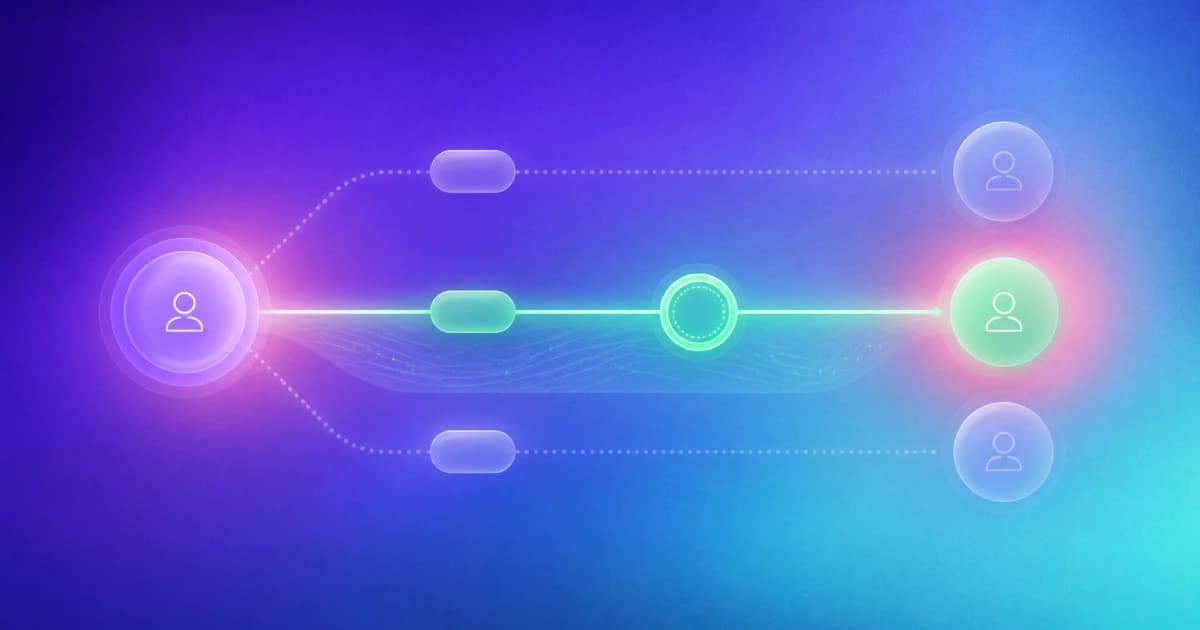
Build an investor relationship map before outreach, but do not confuse a map with a fundraising strategy. A useful map organizes the investors you want to reach, the people who may provide context, the evidence behind each possible path, and the next action a founder is willing to own. It cannot prove interest, consent, fit, or a fundraising outcome.
Finta's current Fundraise OS page describes an investor pipeline and a warm-intro system for founders, alongside templates, documents, and follow-up workflows. Its CRM page describes relationship records with mutual connections and reviewable introduction requests. Finta Fundraise OS is the canonical workflow destination, while Finta Networks is the canonical product destination for relationship paths.
Start with a small, defensible map
Do not begin by importing every name you can find. Start with a defined fundraising target profile, then map only the information that will change a next decision. The template below uses generic labels so it can be tested without exposing private relationship data.
| Target | Why this target may fit | Possible connector | Evidence to inspect | Permission status | Next action |
|---|---|---|---|---|---|
| Fund A | Matches stated stage and sector criteria | Advisor B | Recent, relevant conversation or explicit context | Unknown | Ask Advisor B whether a brief request would be welcome |
| Fund C | Matches only part of the target criteria | No known connector | Public thesis and current partner focus | Not applicable | Research further or prepare concise direct outreach |
| Fund D | Strong fit on paper | Operator E | Old connection with no current context | Needs validation | Do not request an intro until context is refreshed |
This is a Finta Editorial Team working table, not a claim about any real fund or person. Its purpose is to force a distinction between target fit, relationship evidence, and permission.
The six-step mapping workflow
- Define fit: write the stage, sector, geography, check-size assumptions, and any constraints that matter to the round. Treat this as a working hypothesis, not a prediction.
- Build a target list: add only investors you can explain in one sentence. Keep the source for that explanation.
- Find available paths: look for relevant advisors, founders, operators, existing investors, and direct history. A path is a possibility, not an obligation.
- Attach source evidence: note the relationship's recency, known context, and uncertainty. Do not record or share data beyond the permissions you have.
- Check permission: distinguish confirmed willingness, a request to ask first, unknown status, and a declined route.
- Choose and own the next action: ask for a light introduction, send direct outreach, refresh context, or defer. Record the result.
Finta's Fundraise OS product page describes a workflow that can map warm intros, track investors through a pipeline, and keep outreach drafted and reviewed by the user. Review the current Fundraise OS details. The important control is not the map itself. It is the human decision about what to ask and when.
How to prioritize without overclaiming
Use two separate columns instead of one opaque priority score: target fit and path confidence. A high-fit investor with no credible warm route may warrant carefully researched direct outreach. A high-confidence connector with a low-fit target may not deserve an ask. Social-network research on tie strength can reveal potential bridges, but it does not tell a founder which request is welcome in a particular relationship. See Granovetter's original work on tie strength for the underlying network concept, not a fundraising conversion rule.
Limitations and safeguards
- A relationship map may omit unconnected inboxes, calendars, and offline context.
- Protect connector privacy and do not share relationship data beyond agreed access and purpose.
- Do not represent an advisor's relationship as an endorsement without their explicit agreement.
- Investor fit and an introduction path are separate questions. Neither guarantees a meeting or capital.
Turn the map into a controlled raise workflow
Choose five targets, document fit and permission for each, then schedule a weekly review of changed evidence and next actions. To operate that workflow in Finta, start with Fundraise OS for the fundraising system and use Finta Networks to inspect available relationship paths.
Continue the relationship intelligence playbook
- Warm Introductions vs. Cold Investor Outreach: A Decision Framework
- How to Coordinate Advisors, Existing Investors, and Connectors During a Raise
Editorial review and disclosure
Research updated August 8, 2026. Written and reviewed by Finta Editorial Team. This is general operational education, not investment, legal, tax, broker-dealer, or fundraising-outcome advice. Finta product references reflect the linked product pages on the research date. Verify current availability, permissions, integrations, and your own policies before relying on a workflow.