Three useful data room examples
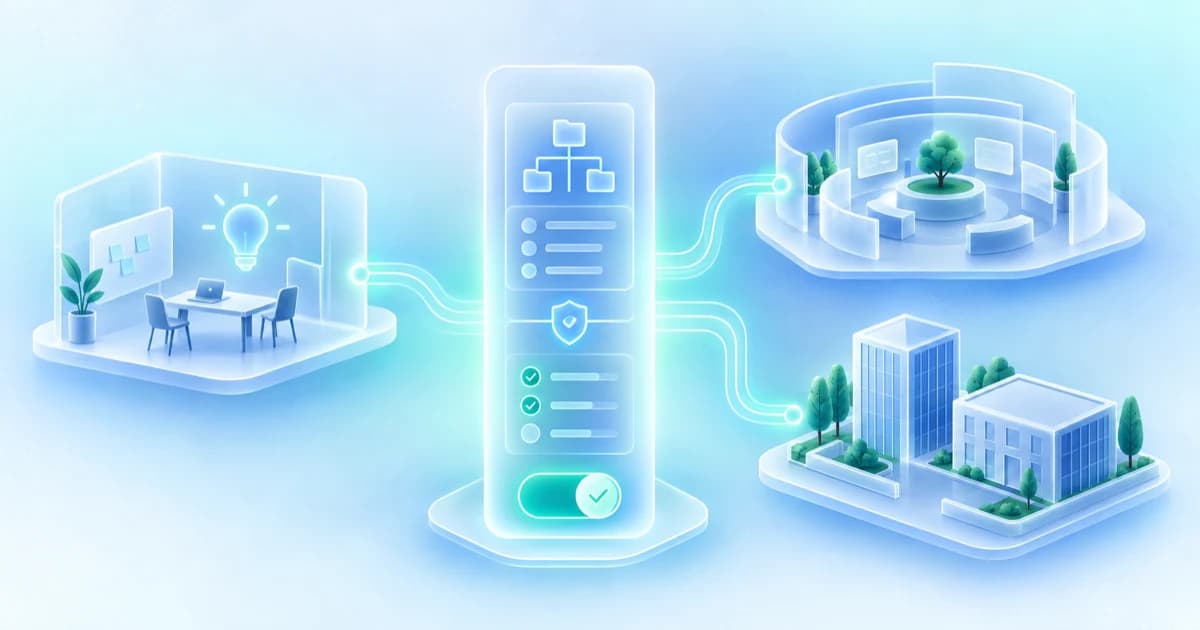
A useful data room example shows how information is organized for a particular decision. It does not simply collect every file a company owns. The best structure makes four things visible: what is available, what is still being prepared, who should see each item, and which source controls the current answer.
The examples below are synthetic. They illustrate an operating pattern for a startup raise, an emerging fund raise, and a real estate raise. They are not legal checklists and should be adapted with the people responsible for finance, legal, tax, security, and the transaction.
If you need the underlying document categories first, use Finta's data room due diligence checklist. This article focuses on how to arrange those materials into a room that another person can navigate.
The five-part launch kit
Every example uses the same five artifacts:
- A short room map that explains the purpose of each section.
- A document index with an owner, date, access level, and status.
- A staged access plan for early review, active diligence, and closing.
- A completeness receipt that distinguishes present, missing, unverified, and not applicable.
- An engagement decision table that keeps page activity separate from investor intent.
That common operating layer matters more than copying someone else's folder names.
Example 1: an early-stage startup data room
Synthetic company: Northstar Labs is raising a seed round. It has a working product, early customer revenue, twelve employees, and a mix of common stock, options, and SAFEs.
Suggested room structure
| Section | What belongs here | Typical first access |
|---|---|---|
| 00 Read me and index | Room map, document index, reporting dates, known gaps, request owner | Early review |
| 01 Company and governance | Incorporation documents, bylaws, board approvals, material consents | Active diligence |
| 02 Round and capitalization | Deck, financing summary, use of funds, current cap table, prior financing documents | Early review for summary, later for detail |
| 03 Financials | Historical statements, current budget, forecast, cash position, metric definitions | Active diligence |
| 04 Customers and market | Customer concentration, material contracts, pipeline methodology, market evidence | Staged by sensitivity |
| 05 Product and technology | Product overview, architecture summary, roadmap, security materials appropriate to the request | Active diligence |
| 06 Legal, IP, and risk | IP assignments, material agreements, litigation or dispute disclosures, regulatory context | Active diligence with counsel |
| 07 Team | Leadership bios, organization chart, employee and contractor summaries, material agreements | Staged by privacy and need |
| 08 Requests and updates | Open requests, approved responses, new versions, and a dated change log | Active diligence |
Northstar does not expose every employee agreement or customer contract at first contact. It starts with the decision-ready story and gives more sensitive material to verified recipients when the process justifies it. The company also keeps unresolved items visible. A row marked missing is more useful than a silent gap.
Example index rows
| Document | Owner | Source date | Access | Status | Notes |
|---|---|---|---|---|---|
| Seed deck | CEO | 2026-09-10 | Early review | Present | Approved external version |
| Capitalization table | Finance lead | 2026-09-12 | Active diligence | Present | Reconcile against signed instruments |
| Customer concentration schedule | Finance lead | 2026-08-31 | Active diligence | Unverified | Quarter-end close still in progress |
| IP assignment for former contractor | Counsel | Not available | Restricted | Missing | Remediation owner and target date recorded |
The status language does not certify accuracy. It tells reviewers what the company currently knows and who is responsible for confirming it.
Example 2: an emerging-fund fundraising room
Synthetic manager: Meridian Ventures is raising its first institutional fund after investing several special-purpose vehicles. Its audience includes family offices, funds of funds, and other prospective limited partners.
Suggested room structure
| Section | What belongs here | Important boundary |
|---|---|---|
| 00 Fund overview | Fund thesis, target portfolio construction, team, fundraising status, index | Do not describe a target as a commitment |
| 01 Manager and team | Entity overview, biographies, decision roles, operating responsibilities | Separate individual experience from attributable firm results |
| 02 Strategy and portfolio model | Stage, sector, geography, ownership targets, reserves, decision process | Label assumptions and examples |
| 03 Track record support | Realized and unrealized attribution, methodology, source records, relevant disclaimers | Use a qualified reviewer for presentation standards |
| 04 Legal and offering materials | Current counsel-approved materials and execution copies when appropriate | Do not substitute a template for legal advice |
| 05 Operations and service providers | Administration, audit, tax, banking, valuation, reporting, and security processes | Identify proposed versus engaged providers |
| 06 Pipeline and sourcing evidence | Anonymized or permissioned opportunity evidence and sourcing method | Do not expose company information without authority |
| 07 LP questions and updates | Approved answers, outstanding requests, dated fund updates | Keep each answer tied to its source and owner |
Meridian can use the room to support diligence, but the room is not an investor portal or fund administrator. After an LP closes, recurring statements, capital calls, distributions, tax documents, account maintenance, and ongoing servicing may require a purpose-built portal and operating provider.
Example 3: a real estate fundraising room
Synthetic sponsor: Harbor Block Partners is raising equity for a multifamily acquisition. It needs to explain the sponsor and offering while maintaining a separate set of property diligence materials.
Room A: sponsor and fundraising materials
- Sponsor history and current team
- Offering summary and approved fundraising materials
- Sources and uses, capitalization, and business plan
- Fee, promote, and governance disclosures from approved documents
- Relevant realized and unrealized performance support
- Risk factors and conflicts identified by the sponsor and its advisers
- Subscription or execution process managed by the appropriate provider
Room B: property diligence materials
- Property description, rent roll, and lease support
- Historical operating statements and current budget
- Appraisal, survey, title, zoning, and insurance materials when applicable
- Environmental and property-condition materials
- Capital expenditure history and planned work
- Debt terms and lender requests when applicable
- Open questions, third-party reports, and remediation items
The separation prevents a common failure: treating property records as if they answer questions about the sponsor, offering, or investor relationship. Actual requirements vary by asset, financing, jurisdiction, investor, and transaction. The real estate data room guide explains the two-room model in more detail.
A reusable access review
Before publishing any room, review access by information class rather than by folder habit.
| Information class | Default question | Possible handling |
|---|---|---|
| Public or approved marketing | Is this already approved for broad external use? | Public or link access may be appropriate |
| Confidential business information | Does this recipient need it for the current decision? | Identified access and restricted downloads |
| Personal or regulated information | Is sharing necessary, authorized, and permitted? | Redact, withhold, or use a more appropriate controlled process |
| Execution material | Is this the approved version and proper execution channel? | Use counsel or the designated signing and administration system |
| Unverified work in progress | Would a recipient mistake this for a final answer? | Keep internal or label the status explicitly |
Access controls reduce avoidable exposure. They do not make an inaccurate document accurate, establish confidentiality by themselves, or prevent every screenshot and offline copy.
A reusable completeness receipt
Run a data room completeness review before sharing. The output should look like this:
| State | Meaning | Required next step |
|---|---|---|
| Present | The expected item exists and has an owner and source date | Confirm that the shared version is approved |
| Missing | The expected item is absent | Assign an owner, due date, and disclosure plan |
| Unverified | A file exists, but accuracy, currency, or authority has not been confirmed | Verify before relying on it |
| Not applicable | The item does not apply to this company or transaction | Record the reason rather than leaving a blank |
Completeness does not mean including every possible file. It means the chosen scope is explicit and each material question has a responsible answer.
A reusable engagement decision table
Activity can help a team prepare, but it should not be converted into intent without context.
| Observed event | What it establishes | Responsible response |
|---|---|---|
| Identified recipient opened the room | The access event was recorded for that identity | Check the relationship state before deciding whether to act |
| A document was previewed or downloaded | The recorded session included that action | Prepare to answer likely questions, without claiming interest |
| A required form was submitted | The recipient supplied a specific response | Route the response to its owner |
| Public link was opened | An anonymous session occurred | Do not attribute it to a person |
| No recorded activity | No activity was captured in the available system | Do not conclude that the material was ignored |
Use the engagement review workflow to choose among following up, waiting, clarifying, or suppressing outreach.
How Finta fits
Finta Documents can organize files and folders and make supported indexed formats available to Aurora. Finta Share Pages can combine approved components and documents into a controlled page with public, email-required, or email-verified access. In supported identified sessions, engagement can return to the relevant relationship record.
Finta does not determine that a room is legally complete, validate an investment, replace counsel, administer a fund, or prove investor intent. A person responsible for the transaction should review the sources, access settings, and external experience before publishing.
When the materials are ready, use the AI fundraising data room solution to connect the room to the fundraising relationship and its next reviewed action.
Sources and review notes
- Finta data room due diligence checklist, reviewed September 14, 2026
- Finta Share Pages, reviewed September 14, 2026
- Finta Documents, reviewed September 14, 2026
- Freddie Mac Multifamily conventional underwriting checklist, reviewed September 14, 2026, used only as evidence that property diligence can require property-specific financial, inspection, insurance, zoning, and legal records
The examples and launch-kit tables are Finta editorial frameworks. They are not a universal diligence standard or legal, accounting, tax, investment, or compliance advice.