What an agentic deal room means for fundraising
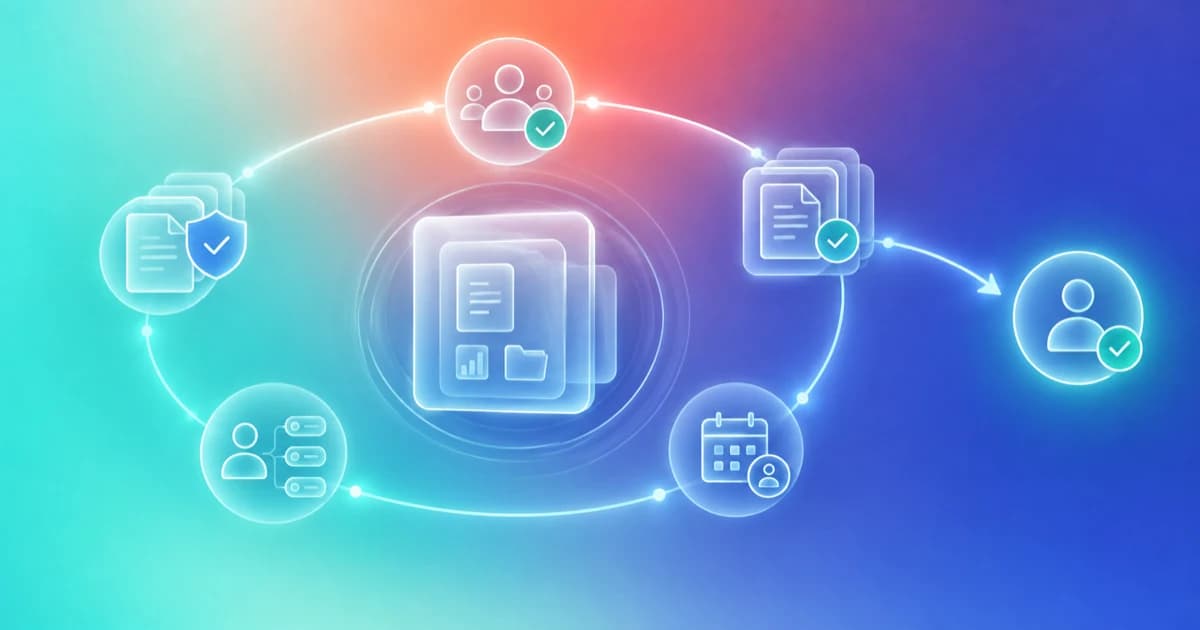
An agentic deal room for fundraising is a controlled workflow that connects approved investor materials, recipient access, relationship context, observed activity, open questions, and the next reviewed action. The data room manages the information boundary. The deal room manages the work around the financing process.
The term "agentic deal room" is not standardized. Current uses span confidential M&A sale processes, engineering requests for quotation, enterprise sales rooms, and acquisition workflows. This article defines a narrower founder-fundraising use. It does not cover M&A execution, a buyer-facing sales room, a legal closing room, valuation, negotiation, or subscription processing.
Why deal room can mean different things
"Deal room" has long been used as another name for a virtual data room. Newer software also uses it for the larger process around a transaction.
That market ambiguity is visible in current products and writing. Hepha calls its engineering workflow from request for quotation to quote an agentic deal room. Highspot uses deal-room language for sales content, CRM signals, and recommended seller actions in its Deal Agent announcement. Matchpoint Partners applies the phrase to a confidential M&A sale process.
None of those examples establishes a universal definition. For a founder, the useful question is whether the system coordinates the fundraising handoffs that otherwise live across a folder, inbox, calendar, CRM, notes, and memory.
Agentic deal room versus agentic data room
| Dimension | Agentic data room | Agentic fundraising deal room |
|---|---|---|
| Primary object | Documents and room state | Investor process and relationship state |
| Core question | What approved information should be found, prepared, or changed? | What should happen next in this financing conversation? |
| Main context | Files, versions, permissions, and room structure | People, requests, meetings, materials, owners, and timing |
| Typical action | Prepare a page, document, index, or controlled room change | Prepare a brief, assign an owner, update the pipeline, or draft follow-up |
| Evidence | Source reference and action receipt | Relationship history, identified activity, open commitments, and result |
| Human control | Publication and access decisions | Recipient, message, timing, commitment, and external action |
Read how agents work inside a document environment for the document-centric model. Continue here when the harder problem is coordinating people and next steps.
The five-stage fundraising deal-room loop
1. Assemble approved context
Start with the investor relationship, the current stage of the raise, the question being answered, and the material the team has approved for that recipient. A document's presence in a library does not make it ready to disclose.
The context may include a CRM record, relevant conversation, meeting history, selected diligence material, and an owner for the next decision. Each source should have a clear date and provenance.
2. Prepare the recipient experience
The team prepares a room or page that answers the investor's current job. It may include a narrative, selected documents, team information, a form, a meeting link, or a clear route for questions.
AI can reduce the assembly work. The product should show which sources informed the result and keep unsupported claims or missing evidence visible.
3. Review access and publish
A person checks content, versions, audience, access mode, downloads, and any acknowledgement before the room goes live. The review should answer two different questions:
- Is this material accurate and approved?
- Is this recipient authorized to receive it now?
Passing one test does not pass the other.
4. Capture activity as evidence
The room may produce observable events such as a verified visit, session time, document preview, download, form submission, or question. Those events can help a team understand what happened.
They do not prove intent. A long session might indicate interest, confusion, a background tab, or internal circulation. Public anonymous activity remains anonymous. Treat identified activity as one source of relationship context alongside direct communication and stated next steps.
5. Prepare the next controlled action
The system can compare the observed event with the relationship history and open commitments, then prepare a brief or draft. A human decides whether to follow up, wait, clarify, suppress an action, or use a separately configured automation.
The loop ends with a receipt: what evidence was checked, what action was prepared or completed, who approved it, and what changed in the relationship record.
Worked example: an investor asks for additional diligence
This example is synthetic.
An investor asks a founder for the current ownership model and a written explanation of retention. The investor expects to revisit the opportunity after a Monday partner meeting.
- The founder selects the approved ownership model and current retention analysis.
- Aurora prepares a Share Page update and a concise explanation from the available sources.
- The founder checks the figures, removes an outdated chart, selects email-verified access, and publishes the page.
- The investor verifies their email, previews the ownership model, and submits a question through the page.
- Finta attaches the supported identified activity to the investor's CRM context.
- Aurora prepares a response that includes the question, the Monday timing, and the source material.
- The founder reviews the recipient, claim, and wording before sending.
Final receipt: a response draft is ready, its sources are visible, and nothing has been sent automatically.
The seven-question agentic deal-room test
Use these questions to separate a controlled process from a feature bundle:
- Sources: Which approved systems and files can the agent use?
- Actions: Which specific operations can it perform?
- Authority: Which actions require confirmation or a named role?
- Identity: How is a recipient identified, and when does activity remain anonymous?
- Evidence: What events return to the relationship record?
- Inference: Does the system separate observed activity from assumed intent?
- Receipt: Can the team see what changed, failed, stopped, or stayed unsent?
NIST's work on agentic systems supports this emphasis on tool visibility, evidence, identity, and authorization. Its agent-evaluation project describes the need to inspect tool usage and gathered evidence in multi-step workflows. Its agent identity and authorization concept paper focuses on controlling agent access to data, tools, and applications.
Where Finta fits
Finta connects the room to the fundraising relationship:
- Documents holds uploaded files, folders, supported indexed sources, and generated work.
- Share Pages provides a flexible recipient experience with public, email-required, or email-verified access and supported sharing controls.
- Aurora assembles available context, prepares supported work, and shows confirmation boundaries.
- Finta CRM keeps supported identified activity with the relationship rather than in an isolated analytics screen.
Inside the Share Page builder, Aurora can prepare custom HTML from instructions, attached files, and supported document-library search. The user reviews the content and controls publication and access. Identified activity can inform a next decision, but it is not proof of investment interest.
Finta does not replace enterprise M&A diligence, legal review, e-signature, formal Q&A administration, redaction, valuation, compliance, fund administration, accounting, subscription documents, or a regulated investor portal. It also does not send a follow-up merely because someone viewed a room. A user can separately configure a supported Page-view automation, but that is an explicit workflow choice.
Move from activity to a defensible next step
A useful agentic deal room does not maximize automation. It preserves context and makes the next permitted action easier to judge. The founder should be able to see why an action is proposed, which evidence supports it, what still needs review, and what happened afterward.
Follow the data-room engagement review workflow for a step-by-step decision process, or see the broader fundraising data-room solution.
Research checked September 14, 2026. "Agentic deal room" remains an emerging and overloaded phrase. This article uses a defined fundraising workflow, not a claim of industry consensus.