Secure investor document sharing starts with the decision
Secure document sharing for investors means giving the right recipient the minimum information needed for the current decision, through controls that match the sensitivity of the material. It is not a single button or a promise that a file can never be copied.
For an active raise, use a controlled link or data room when identity, staged disclosure, download settings, revocation, and engagement context matter. A normal shared folder can still be appropriate for internal collaboration or lower-sensitivity exchanges when its permissions are configured and reviewed correctly.
The goal is not to make diligence difficult. It is to make the disclosure deliberate.
Use the CRAFT review before sharing
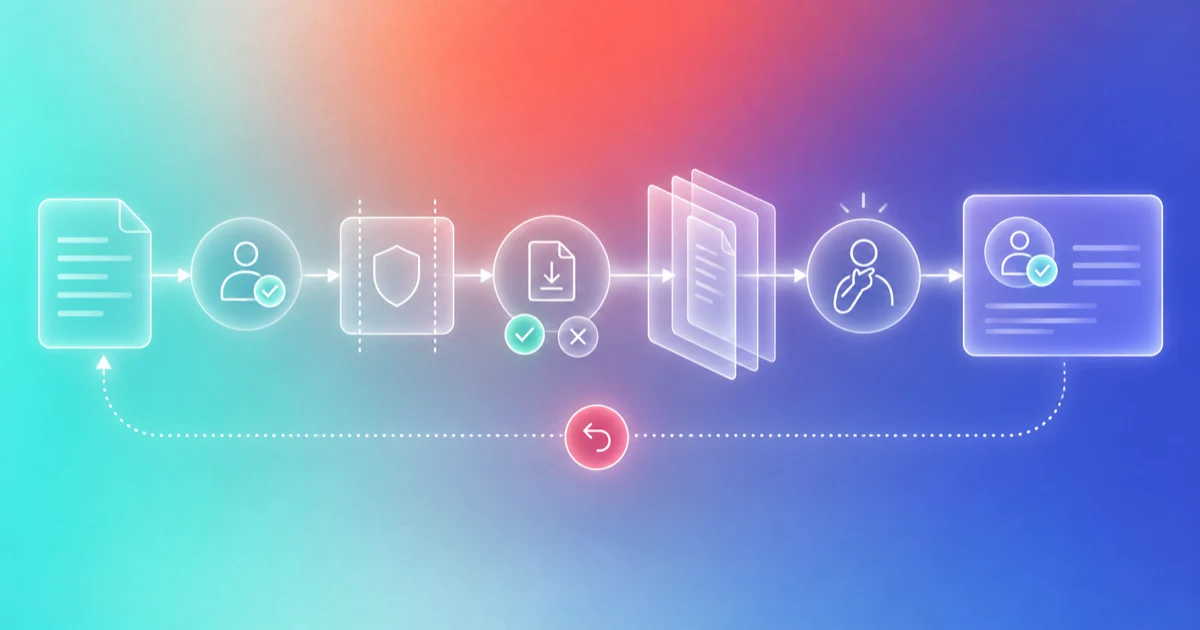
Finta uses a five-part editorial framework for this decision:
- Classify the information by sensitivity and purpose.
- Restrict access to the people who need it for this stage.
- Authenticate when recipient identity matters.
- Follow the recorded activity with human judgment, not automatic assumptions.
- Terminate or revise access when the need changes.
This is an operating checklist, not a security certification.
1. Classify the material
Start with the data room due diligence checklist, then place each document into an information class.
| Class | Examples | Default posture |
|---|---|---|
| Approved fundraising material | External deck, approved company overview, public product information | Share at the opening stage if the team has approved it |
| Confidential company information | Detailed financials, customer concentration, material contracts, product plans | Share with verified recipients when the process justifies it |
| Personal or regulated information | Employee records, identification documents, bank or tax details | Minimize, redact, or route through an appropriate specialist system |
| Execution material | Financing documents, subscription documents, signatures, wire instructions | Use the approved legal, signing, banking, or administration process |
| Unverified work | Draft models, unreconciled cap tables, unresolved answers | Keep internal or label clearly until verified |
The Federal Trade Commission's business security guidance recommends limiting sensitive-data access to people with a legitimate business need and keeping only information the business needs. The exact legal and security obligations depend on the information, organization, and jurisdiction.
2. Restrict access by stage
Avoid one permanent room in which every investor sees every file from the first meeting onward. A simple staged model is usually clearer:
Early review
- Approved deck or summary
- Round objective and use of funds
- Selected traction and market evidence
- A clear way to request the next step
Active diligence
- Detailed financial and operating support
- Capitalization and financing records
- Material customer, product, IP, team, and legal information
- An index of open requests and known gaps
Closing or execution
- Final approved transaction documents
- Signatures and identity checks through the designated provider
- Payment or wire instructions through a separately verified channel
Access level is not a judgment about whether an investor is trustworthy. It reflects whether the recipient needs a document for the current stage and whether the company is authorized to share it.
3. Authenticate when identity matters
Link access, email-required access, and email-verified access answer different questions.
| Access model | What it can establish | Main limitation |
|---|---|---|
| Public or anyone-with-link | Anyone holding the link can reach the material | The viewer may remain unknown |
| Email required | The viewer supplies an email address | A supplied address may not prove control of the inbox |
| Email verified | The viewer completes a verification step | Verification identifies the address, not authority or intent |
| Managed account or portal | The user signs into an account governed by the provider | Coverage and controls depend on configuration and product scope |
Finta Share Pages support public, email-required, and email-verified access. Dynamic watermarking, ZIP download settings, and investor-accreditation collection are available in supported identified configurations. Public anonymous sessions remain anonymous, and a verified email does not prove the person's role, authority, or investment interest.
4. Follow activity with judgment
An access event is evidence that something happened in the sharing system. It is not a complete account of the recipient's decision.
For an identified Finta contact, supported Share Page activity can include total session time, document previews or downloads, and submitted forms. Use those records to prepare for a conversation or route a specific response. Do not label someone highly interested because they opened a page twice.
The same caution applies to specialized document-tracking tools. Dropbox DocSend's official documentation describes page-level visits, time spent, downloads, and visitor details, while noting that identity depends on requiring email and that location can be distorted by VPN use. Tracking depth varies by provider and plan.
Use the data room engagement review workflow before sending an external message.
5. Terminate, narrow, or revise access
Access reviews should happen when:
- a recipient passes or stops responding;
- the company moves from early review into active diligence;
- a document becomes outdated or incorrect;
- a team member or adviser leaves the process;
- the information changes sensitivity;
- the raise closes or the room is retired.
Do not assume that disabling a link removes copies already downloaded. If a document should never leave the controlled environment, verify what the chosen system actually enforces and consider whether the information should be shared at all.
Choose the sharing surface by job
| Job | Reasonable starting surface | Why |
|---|---|---|
| Drafting with your internal team | Managed shared drive | Collaboration and shared ownership matter most |
| Sending an approved deck | Trackable document link or Share Page | Easier external experience and optional identity controls |
| Running active investor diligence | Structured data room or Share Page | Organized disclosure, staged access, and request follow-through |
| Collecting signatures or subscription information | Approved execution or administration system | Identity, legal, payment, and operational requirements exceed normal sharing |
| Serving LPs after close | Investor portal or fund-administration platform | Ongoing reporting, notices, account data, and servicing are different jobs |
The Google Drive versus virtual data room guide explains why a shared drive and a fundraising room can coexist.
Synthetic example
Northstar Labs is preparing to share customer contracts with a prospective investor. It does not place the full contract folder in the same public link as the deck.
- The CEO and counsel classify the contracts and decide which are material to the request.
- The team prepares an approved schedule and redacts information it is not authorized or required to disclose.
- The recipient receives verified access to the diligence section.
- Downloads are configured according to the company's approved sharing decision.
- A document preview is recorded for the identified session.
- The CEO reviews the actual relationship state and open diligence question before deciding whether to follow up.
- Access is removed when the investor passes.
The example does not prove that these steps satisfy any particular legal, contractual, or security obligation. The responsible team and its advisers determine those requirements.
What controls cannot establish
No normal sharing system can make these conclusions for you:
- that the document is accurate or current;
- that the recipient has authority to evaluate or commit;
- that an NDA or watermark prevents every disclosure;
- that a recorded open reflects genuine human attention;
- that a download establishes investment intent;
- that a security feature is configured correctly for your risk;
- that the room satisfies legal, regulatory, contractual, or compliance requirements.
Security claims should be evaluated against the provider's current documentation, the organization's configuration, and the sensitivity of the specific material.
How Finta fits
Finta Documents can hold individual files or folder hierarchies and make supported indexed formats available to Aurora. A connected Google Drive source does not continuously synchronize files into the Finta Documents library. Files enter that library through supported upload and generation workflows.
Finta Share Pages can bring approved documents and other supported components into one recipient experience, with access settings selected before publication. Identified activity can return to the relationship record, where the team can review context before the next action.
Finta does not replace an enterprise security program, legal review, e-signature platform, fund administrator, investor portal, or specialist compliance process. Use the AI fundraising data room solution when the primary job is to connect fundraising materials with an active investor relationship.
Sources and review notes
- FTC, Start with Security: A Guide for Business, reviewed September 14, 2026
- Google Drive file-sharing controls, reviewed September 14, 2026
- Google Workspace DLP for Drive, reviewed September 14, 2026
- Dropbox DocSend Activity documentation, reviewed September 14, 2026
- Finta Share Pages, reviewed September 14, 2026
- Finta Documents, reviewed September 14, 2026
This article provides general operational guidance. It is not legal, security, investment, accounting, tax, or compliance advice.