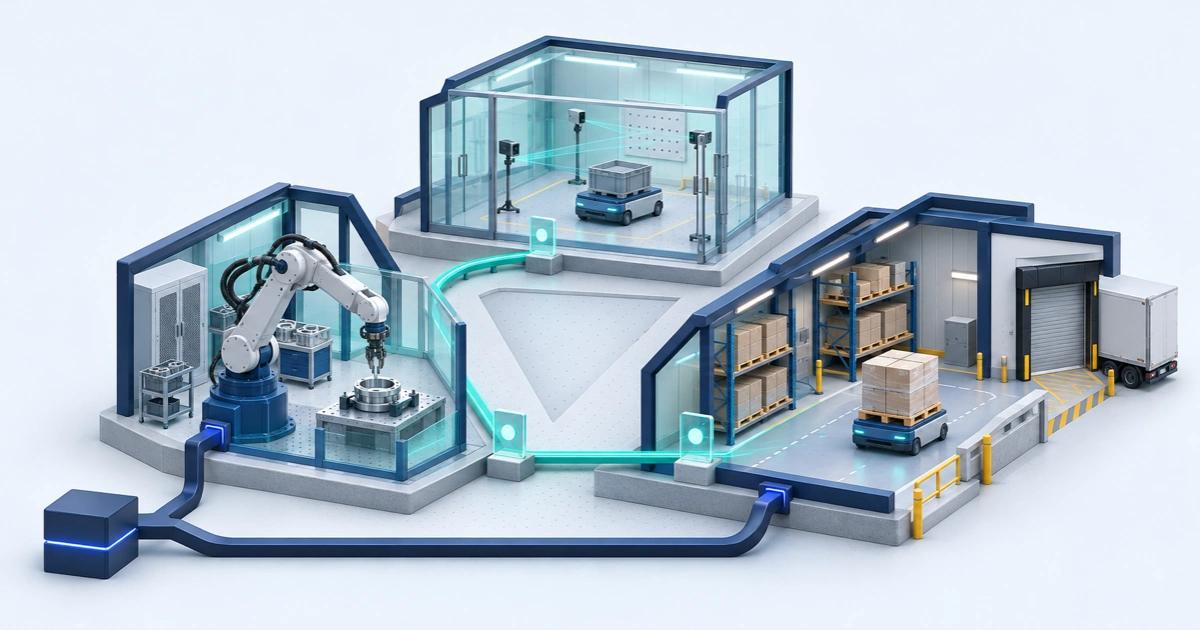
A working robot is an important milestone. A repeatable customer deployment is another. The right investor should understand the gap between the two: engineering reliability, installation, support, manufacturing and a buyer willing to use the product.
These 15 investor routes help a robotics team compare that gap with published investment criteria. They include robotics specialists, early-stage engineering investors and strategic investors whose typical entry is later. They are not all first-prototype funds, and investment does not guarantee a customer pilot.
Match the investor to the robotics milestone
Start with the next thing the company must prove. A lab prototype may need technical validation and access to engineering infrastructure. A customer pilot may need reliable installation, operator training and clear acceptance criteria. An early rollout may need manufacturing and working-capital planning.
Then ask whether the provider can invest at the company's current stage, in its actual geography and product category. For example, HAX's pre-seed investment programme is a different route from ABB Ventures' typical Series A or B investment. Both may matter over the company's life, but not in the same queue today.
Compare robotics and industrial investor routes
Stage labels below describe published positioning, not funding offers. Where a precise country or entry rule is not public, keep it as a question. A corporate pilot, an accelerator seat and an equity check should occupy separate fields in your research.
| Investor | Product focus | Stage or route | Geographic filter |
|---|---|---|---|
| Cybernetix Ventures | Robotics, automation and industrial AI | Pre-seed, seed and Series A | Confirm company-country eligibility with the team |
| R7 Partners | Physical AI and industrial technology | Early-stage; confirm the specific entry round | Confirm company geography and operating requirements |
| ff Venture Capital | Robotics, manufacturing, AI, energy and security | Seed and early-stage | Confirm the appropriate regional team and company eligibility |
| SOSV through HAX | Hard tech, physical AI and industrial engineering | Pre-seed initial entry; later follow-on is separate | Global founders; confirm US programme participation requirements |
| Root Ventures | Engineering-led systems, hardware and automation | Seed; published focus on leading initial funding | San Francisco-based; confirm company-country scope |
| HCVC | Industrial technology and scientific commercialization | Inception to Series A; current emphasis on pre-seed and seed | Europe and the US |
| Toyota Ventures | AI, robotics, mobility and other deep tech | Early-stage | Entrepreneurs from around the world; confirm company conditions |
| Playground Global | Automation and engineering-led technologies | Earliest stages of company formation | Confirm geography with the investment team |
| Construct Capital | Manufacturing, logistics and foundational industries | Early-stage | Confirm eligible company markets and domicile |
| ABB Ventures | Industrial electrification, motion and automation | Typically Series A and B | Worldwide industrial strategy; confirm business-unit fit |
| SE Ventures | Industrial automation, energy management and sustainability | Confirm entry stage and the relevant investment team | Global platform; confirm company and market scope |
| Eclipse | Industrial systems, manufacturing and physical technology | Company formation and early-stage routes; confirm fit | Confirm geography and the relevant fund or building programme |
| DCVC | Computational approaches, robotics and industrial transformation | Early company relationships through later rounds; confirm first-check criteria | Confirm company geography and strategy eligibility |
| Lux Capital | Frontier technology, including robotics and automation | Company creation and early investments; confirm current first-check route | Confirm company-country and team eligibility |
| Point Nine | AI in the digital, physical and biological world | Early-stage | Europe-based, investing globally |
Read provider criteria and approach routes
1. Cybernetix Ventures
Robotics specialist venture investor. Cybernetix explicitly names pre-seed, seed and Series A across manufacturing, logistics, construction, healthcare and enabling robotics technologies. Match the proposal to a customer workflow and show what the next deployment will prove. Its community relationships are useful context, not a guaranteed pilot or purchase order.
Founder route: Contact Cybernetix. Official criteria.
2. R7 Partners
Early-stage hard-tech venture investor. R7's current positioning centers on the industrial economy, physical AI and hard technology. Its published companies include laboratory automation, autonomy and robotic assistance. Explain the technical advantage alongside the deployment bottleneck; ask what evidence the team needs for an initial investment rather than infer it from a portfolio company's current stage.
Founder route: Official contact or pitch route. Official criteria.
3. ff Venture Capital
Seed and early-stage venture investor. ffVC lists robotics and manufacturing among its current focus areas. That makes a concrete industrial use case more useful than a generic robotics market slide. Present the pilot buyer, task, deployment economics and next engineering milestone. Use the official contact route, not its investor-relations portal.
Founder route: Contact ffVC. Official criteria.
4. SOSV through HAX
Venture investor with a hands-on investment programme. HAX combines SOSV investment with engineering support for pre-seed hard-tech teams. Its current site describes industrial validation and manufacturing constraints, making it relevant before a polished commercial installation exists. Treat participation, location and investment conditions as part of fit. Count SOSV and HAX once, not as two independent investors.
Founder route: Review the programme and Apply link. Official criteria.
5. Root Ventures
Deep-tech seed venture investor. Root explicitly specializes in initial funding for technical founders. Its published robotics and industrial-software companies give useful context for a prototype discussion, but do not substitute for a current mandate conversation. Explain which engineering uncertainty the round removes and what a successful customer pilot would make investable next.
Founder route: Official contact or pitch route. Official criteria.
6. HCVC
Hard-tech venture investor. HCVC explicitly describes the progression from lab results to prototypes, pilots and factories. Its current early-stage geography is Europe and the US. Bring a milestone plan that includes suppliers, manufacturing and deployment, not just model performance. Hardware Club and HCVC are one platform for this list.
Founder route: Official contact or pitch route. Official criteria.
7. Toyota Ventures
Corporate venture capital investor. Toyota Ventures names robotics in its current frontier-tech scope and provides a public pitch form. It is an investor, not an automatic Toyota procurement route. Separate the equity ask from any possible commercial collaboration, and state the industrial task and evidence the first pilot will produce.
Founder route: Submit a pitch. Official criteria.
8. Playground Global
Deep-tech venture investor. Playground's current strategy includes automation and emphasizes early company formation. A technical team can use this route before a full commercial rollout, provided the company thesis and engineering advantage are compelling. Show why the proposed pilot tests a scalable product rather than a one-off integration.
Founder route: Use the official Let's talk route. Official criteria.
9. Construct Capital
Early-stage industrial venture investor. Construct backs technology rebuilding foundational industries, including automation-heavy operating environments. Lead with the customer problem, buying process and repeatability of deployment. The useful question is whether this is a scalable industrial company, not simply whether a robot appears in the product demo.
Founder route: Contact a relevant team member through the official site. Official criteria.
10. ABB Ventures
Corporate strategic venture investor. ABB's current venture criteria name Series A and B as typical entry stages. This is a later-readiness route in the table, not a universal first-prototype fund. Its site distinguishes venture investment from startup challenges and the SynerLeap hub. A paid proof of concept and an equity investment are different decisions.
Founder route: Review venture and startup-initiative routes on the official page. Official criteria.
11. SE Ventures
Strategic venture investment platform. SE Ventures pairs venture investment with an industrial and energy-management perspective. Explain how the robotics product fits that remit and which commercial deployment would validate demand. Strategic access is not a promise that Schneider Electric will buy, integrate or pilot the product.
Founder route: Review the Approach and Accelerator routes on the official site. Official criteria.
12. Eclipse
Physical-economy venture investor and company builder. Eclipse's current thesis centers on transforming physical industries. Its Venture Equity route separately supports company creation from day zero. Identify whether the conversation concerns building a company, an initial round or later commercialization; do not treat those routes as interchangeable.
Founder route: Review Eclipse and its Venture Equity programme. Official criteria · Supporting official evidence.
13. DCVC
Deep-tech venture investor. DCVC's current strategy explicitly includes robotics and automating difficult industrial work. Show how computation changes the economics or capability of the physical system, with realistic evidence from the target environment. A long investment history does not mean every stage or robotics application fits.
Founder route: Find the relevant investment team on DCVC's official site. Official criteria.
14. Lux Capital
Science and technology venture investor. Lux's official materials describe company creation and seed-style experimentation; its current company roster includes Physical Intelligence. Connect the robotics thesis to a defensible scientific or engineering advance. Do not use a later portfolio financing as proof that an unproven prototype qualifies.
Founder route: Use the official Contact route. Official criteria · Supporting official evidence.
15. Point Nine
Thesis-driven early-stage venture investor. Point Nine's current thesis explicitly includes the physical world, rather than only its older SaaS positioning. It is most relevant when AI is central to the robotics company's advantage. Confirm that the product and hardware requirements fit the current partnership; do not assume it runs a hardware laboratory or customer-pilot programme.
Founder route: Official contact or pitch route. Official criteria.
What should a robotics pilot prove?
Define success with the customer before defining the fundraising story. Pick a task, operating environment and measured acceptance condition. Track intervention frequency, task completion, safety review ownership, downtime and support effort where relevant. Do not convert a successful laboratory demonstration into a claim of production readiness.
Keep three evidence packets: the technical test, the customer decision and the capital milestone. The first explains what works. The second explains who wants it and under what conditions. The third explains what this round will make possible. A signed letter of interest is not the same as revenue, and a strategic conversation is not a purchase order.
A worked shortlist for a warehouse robotics team
Fictional example: A team has a picking prototype and one prospective warehouse pilot. It investigates Cybernetix for robotics-specific early-stage fit, Root for initial technical funding and HAX if the hands-on programme and participation conditions suit the team.
The founders keep a separate later-readiness queue for strategic investment. They do not present ABB's typical Series A/B remit as a pre-seed promise. Their next-round plan specifies the number of installations they can support, the reliability evidence to collect and the remaining manufacturing questions. Investor conversations now have a concrete purpose beyond “we are raising for robotics.”
Copy the robotics investor-fit worksheet
Use one row per investor, and keep the customer-pilot work beside the round in Finta. Record the source, the open question and the person responsible for the next step.
ROBOTICS PROTOTYPE-TO-PILOT INVESTOR FIT
Company / product / actual operating countries:
Current stage and capital available:
Customer task and operating environment:
Prototype evidence already collected:
Pilot customer and decision owner:
Acceptance criteria and measurement period:
Installation, training and support owner:
Safety and regulatory review owner, if relevant:
Manufacturing and supply-chain dependencies:
Next milestone this round funds:
Investor / current official source / checked date:
Provider type / entry stage / geography / sector:
Investment ask versus separate commercial-pilot ask:
Documented round role, or unknown:
Relationship context / permission to ask for an introduction:
Open eligibility question / next action / owner / due date:
Ask Aurora, Claude or Codex to review your shortlist
Supply your facts and the official sources. Review the result before acting; this is a research aid, not automatic outreach.
Review this robotics investor shortlist using only the company facts and current official investor sources I provide. Separate prototype, controlled test, customer pilot and repeatable deployment. Compare each investor's provider type, stage, product thesis, company-country eligibility and public approach route. Do not infer an open mandate from a portfolio logo, an office or a previous funding round. Keep venture investment, programme participation and paid pilots separate. Flag unknown criteria, later-stage routes and unsupported commercial claims. Return a prioritized research queue and the evidence needed before outreach. Do not send messages or promise introductions or funding.Methodology and related resources
The Finta Editorial Team used VC Sheet and existing investor research for discovery, then reviewed current investor-controlled strategy, programme, company and contact pages. Each platform is counted once, including HAX within SOSV. Profiles distinguish published criteria from questions still needing confirmation. Research checked November 13, 2026.
For the broader process, use our hardware commercialization funding guide and the seed fundraising comprehensive guide. This directory supports investor selection; it does not replace those frameworks.
This is general research and organizational information, not personalized financial, legal or engineering-safety advice.