Fund the next proof, not just a more impressive prototype
A hardware or robotics company can have a functioning prototype and still face unresolved technical, integration and commercial risks. Funding research becomes more useful when the team can explain the next proof it needs: whether a mechanism works, whether it performs outside the lab, whether a customer will use it, or whether it can be manufactured repeatably.
Research awards, paid pilots and venture investment support different relationships and obligations. This guide maps those routes to evidence generation before commercial production. For inventory, deposits and cash timing after a production order, use the separate first manufacturing production-run guide.
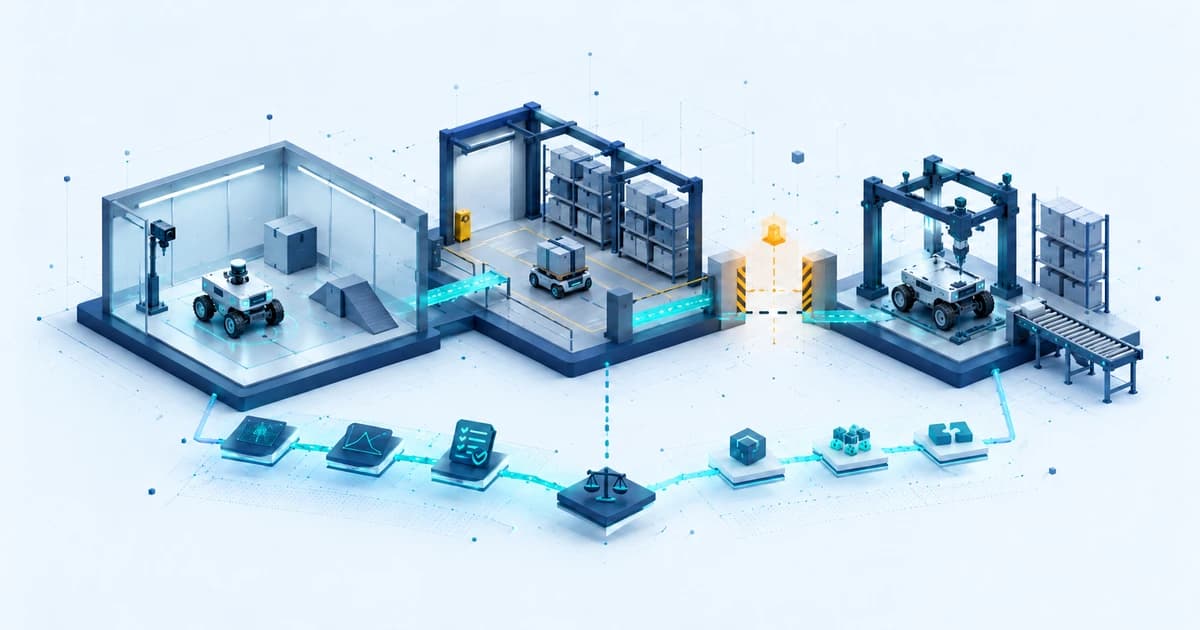
Use a prototype-to-commercialization evidence map
| Milestone | Useful evidence | Route to investigate |
|---|---|---|
| Core technical feasibility | Bounded technical claim, test method and result | Topic-matched small-business R&D funding |
| Integrated prototype | Performance, failure logs and system dependencies | R&D route or hard-tech investor aligned to the stage |
| Operational pilot | Named use case, test environment and acceptance criteria | Venture-client or customer-funded pilot |
| Commercial validation | Customer feedback, contractual scope and actual payment evidence | Commercial partnerships and stage-appropriate investment |
| Repeatable production | Supplier, yield, quality and unit-cost evidence | Commercialization capital; production cash cycle considered separately |
One milestone can involve several risks. A successful laboratory test is not field reliability; a pilot conversation is not a purchase order; a working unit is not a production-ready product. Keep the evidence boundary attached when preparing a funding brief.
Four real routes with different jobs
NSF America's Seed Fund
NSF's Project Pitch is an initial step toward Phase I funding for eligible startups and small businesses. Its job is to explain the technical innovation, risk and commercial opportunity, not to ask for ordinary working capital. A pitch invitation is not a funding award. Review the current solicitation and applicant rules before selecting the route.
NASA SBIR and STTR
NASA's SBIR/STTR program connects small-business technology development to NASA needs. Match the actual topic and phase, not merely the fact that the product includes robotics or advanced engineering. Later-phase opportunities can require prior program awards. Check the current solicitation and schedule rather than assume every listed opportunity accepts first-time Phase I applicants.
BMW Group Startup Garage
BMW's venture-client program describes buying a first unit of a startup's solution to validate it in relevant vehicles, services, factories or systems. This is a commercial-customer route, not a universal cash grant or a promise of a long-term supply contract. Confirm the actual pilot scope, budget owner, payment conditions and permissions.
HAX
HAX describes hands-on venture capital and engineering support for pre-seed hard-tech founders. Treat investment and facilities or specialist support as different parts of the offer. It is not a non-dilutive government grant; verify the current investment structure and participation terms directly.
None of these routes is ranked “best.” Match the company, project, geography, stage and instrument before building a shortlist. The SBIR/STTR agency guide and strategic corporate funding guide provide deeper route-specific context.
Illustrative example: a warehouse robotics team
Dock Robotics is a fictional team with a laboratory navigation prototype. It has not tested its system around moving forklifts or integrated it with a warehouse workflow. Its next project is a defined operational validation, not immediate fleet deployment.
The team creates three evidence lines: performance already observed, field conditions still untested, and customer acceptance criteria still to agree. It considers an agency topic if the actual R&D problem fits and a venture-client conversation if a relevant buyer can define a pilot. A hard-tech investor conversation uses the same gaps rather than hiding them.
The result is a clear milestone brief and a smaller set of justified conversations. No program fit, investment close, paid pilot or commercial outcome is asserted.
Build a source-backed funding brief
- Name the next milestone and the uncertainty it addresses.
- Attach dated evidence, including unsuccessful tests and important constraints.
- Separate research costs, pilot costs and production cash requirements.
- Record who owns the technical work, IP and customer permissions.
- Save current program or provider requirements and open questions.
- Keep application acknowledgement, selection, signed commercial scope and payment receipt as different states.
Let a relevant specialist or program contact resolve classification and requirements. Do not use an AI-generated technical-readiness label or an attractive award maximum as the funding plan.
Coordinate the work with Finta
Keep genuine program, investor and customer contacts in Finta CRM, and reviewed test evidence in Documents. Aurora can draft a source-linked milestone narrative or list missing materials from authorized context. Your team verifies technical and contractual representations.
Use the SBIR/STTR evidence recipe or the project narrative workflow. Finta does not replace the lab, certify the hardware or submit funding portals.
Research method and limits
Official NSF, NASA, BMW and HAX sources were checked on 2 October 2026. Program existence is not an open application window. We omit historic award and investment amounts that could imply an offer to this reader. This is general route and evidence education, not engineering certification, IP advice or a financing recommendation.