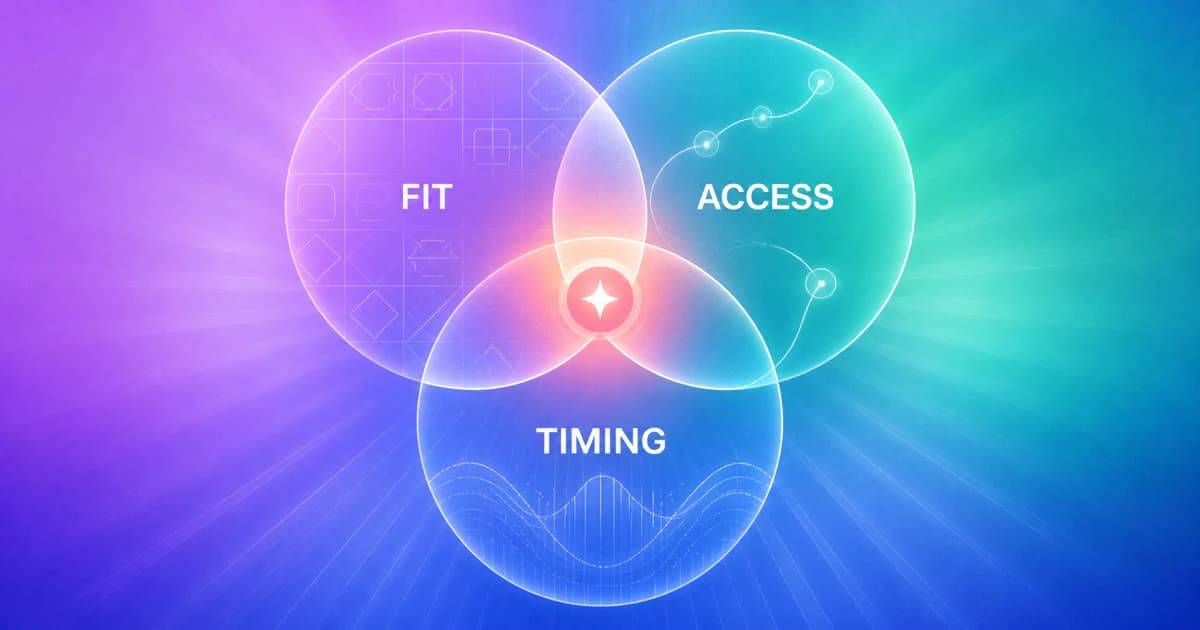
Direct answer: Prioritize prospective LPs with evidence of fit, access, and timing, then assign one next action that could improve confidence. The framework below is an editorial operating tool. It does not predict a commitment or replace an LP's own diligence process.
Research update: This article was initially published on June 12, 2026 and was reviewed against current sources on August 8, 2026.
Start with a relationship decision, not a generic ranking
A long LP list can make every institution look equally urgent. It is more useful to ask a narrower question: is there a credible reason to engage this relationship now, and can the next interaction be useful to both sides? The ILPA Principles frame private-market partnerships around alignment, governance, and transparency. Those principles do not create a universal scoring formula, but they are a useful guardrail against ranking prospective LPs only by name recognition or assumed purchasing power.
Use only information that is relevant to the potential relationship and appropriate for your organization to maintain. A score should summarize documented evidence, not infer interest from sensitive personal data, unverified rumors, or a person’s social proximity.
The Fit, Access, Timing framework
| Lens | What to verify | Low signal | High signal | Evidence to record |
|---|---|---|---|---|
| Fit | Mandate, fund type, portfolio construction needs, relationship objective, and constraints disclosed by the institution. | Only a broad category match. | A documented reason the strategy and relationship may be relevant. | Public mandate, prior conversation, referral context, and open questions. |
| Access | Whether a direct conversation or credible warm path exists, and whether the introducer can explain the reason for the connection. | No known owner or reason to contact. | A willing owner, a relevant introduction path, or an existing conversation. | Relationship owner, path source, introduction status, and consent to make the ask. |
| Timing | Whether there is a legitimate reason to reconnect now, such as a stated process, a relevant update, or a promised follow-up. | No current trigger and no agreed next step. | A clear, timely reason tied to the relationship or fundraising process. | Last interaction, current trigger, promised follow-up date, and next decision. |
Score each lens from 0 to 4 only when the supporting note exists. A total is useful for triage, not as a substitute for judgment. If a relationship has strong fit but weak access, the correct next step may be research or a respectful introduction request, not repeated outreach.
Worked example: an illustrative LP queue
The following is fictional and shows how a team can make its reasoning inspectable. It is not a benchmark for commitment probability.
| Prospective LP | Fit | Access | Timing | Total | Decision |
|---|---|---|---|---|---|
| LP A | 4: stated strategy aligns with the fund thesis | 3: advisor can make a context-rich introduction | 4: follow-up was agreed after a relevant update | 11 | Prepare the update and request the introduction. |
| LP B | 4: credible mandate fit | 1: no relationship owner identified | 2: no current process signal | 7 | Qualify the access path before outreach. |
| LP C | 2: broad category fit only | 4: existing relationship with a partner | 1: no timely reason to re-engage | 7 | Cultivate with a relevant update, not a meeting request. |
A practical threshold is simple: act now when the evidence supports a valuable conversation, cultivate when one lens is missing, qualify when the team is relying on assumptions, and pause when there is no respectful reason to contact the institution.
What not to use as a prioritization shortcut
- Do not treat a mutual connection as permission to request an introduction.
- Do not infer an institution's mandate, check size, timing, or appetite from a stale database record.
- Do not turn private notes into claims about a person or institution that the team cannot substantiate.
- Do not keep an LP at the top of a queue merely because the team has already invested time. Reassess the evidence and next action.
Turn every interaction into durable context
The score becomes useful only when the supporting evidence, relationship owner, and next action remain connected. Finta's public product page says it connects inbox, calendar, documents, CRM, and network context so Aurora can surface what matters next. Use a workspace such as Finta to keep the evidence behind the priority, the last interaction, and the planned follow-up in one place. Confirm current product fit, permissions, and your organization’s approval rules before configuring a live LP workflow.
Limitations
This framework is general relationship-operating guidance. It does not determine LP suitability, legal disclosure obligations, investment terms, or fundraising outcomes. Fund structures, investor types, jurisdictions, and internal policies can materially change the appropriate process.
Continue the relationship intelligence playbook
- How to Map Warm Paths to LPs and Family Offices
- Fund I vs. Fund II and III: How the Relationship Strategy Changes
Editorial review and disclosure
Written and reviewed by Finta Editorial Team. The Fit, Access, Timing framework is an original editorial model, not a survey result, customer benchmark, or predictive scoring system. Finta is the publisher and is linked as a relevant relationship-workspace option. This article is not legal, tax, investment, or fundraising advice.
Sources
- Institutional Limited Partners Association, ILPA Principles, reviewed August 8, 2026.
- Finta product page, reviewed August 8, 2026.