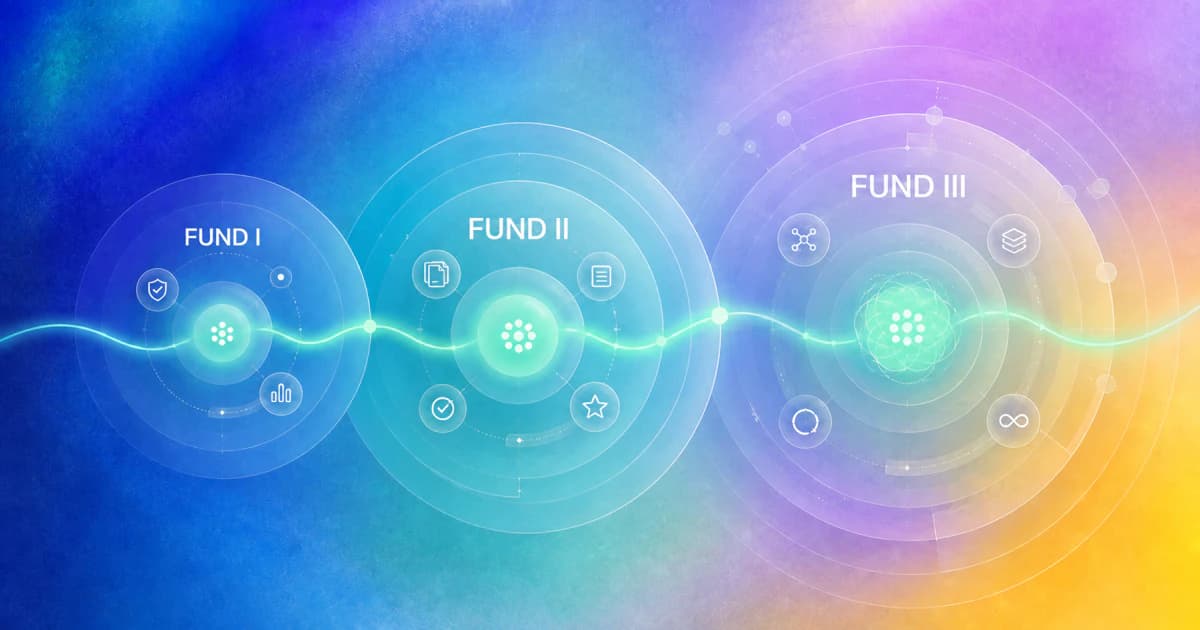
Direct answer: Do not change an LP relationship strategy merely by renaming pipeline stages for Fund II or Fund III. Change the evidence, conversation, and follow-through plan based on what a prospective LP needs to understand about the firm at that point in its history.
Research update: This article was initially published on June 16, 2026 and was reviewed against current sources on August 8, 2026.
Use a different relationship question at each fund stage
A useful planning hypothesis is that the relationship work evolves from explaining the investment proposition, to demonstrating early execution, to showing that the organization can repeat a disciplined process. That is not a universal LP diligence sequence. Each institution has its own mandate, governance, pacing, and information requirements. The ILPA Principles are a relevant reference point because they foreground alignment, governance, and transparency in GP-LP partnerships.
The practical implication is to maintain the history behind a relationship. A prospective LP should not have to reconstruct the firm's strategy, prior commitments, promises, and updates from disconnected emails or slides.
An evidence ladder for Fund I, Fund II, and Fund III
| Fund cycle | Relationship question to prepare for | Evidence to organize | Useful conversation prompt | Follow-through discipline |
|---|---|---|---|---|
| Fund I | Why this team, strategy, and market window? | Team history, thesis, decision process, referenceable operating experience, and clear disclosures of what is not yet proven. | What would help you evaluate our strategy and governance process? | Document questions, owners, and the next evidence request. |
| Fund II | What did the team learn from the first portfolio and operating cycle? | Consistent updates, decision rationale, lessons, attribution discipline, and changes to the strategy. | Which early results and lessons would you want to examine before discussing a repeat commitment? | Connect prior questions to the update that resolves them. |
| Fund III | Can the firm preserve discipline while scaling its platform and portfolio? | Strategy continuity, team and governance evolution, portfolio-construction logic, reporting cadence, and documented exceptions. | What evidence would help you assess repeatability and change management? | Keep a clear record of commitments, decisions, and later updates. |
This table is a planning tool. It does not state what any LP will require, and it should never be used to obscure fund-specific risks, conflicts, or disclosures that require qualified professional advice.
Worked framework: the relationship evidence loop
For each prospective LP, keep one short loop rather than a pile of disconnected notes:
- Question: What is this relationship trying to learn or decide?
- Evidence: Which document, data point, or conversation can address that question?
- Owner: Who is responsible for the next response and internal review?
- Commitment: What did the firm promise to send, clarify, or revisit?
- Update: When will the team confirm that the commitment was completed and still accurate?
| Illustrative record | Example |
|---|---|
| Question | How will the firm preserve its stated investment discipline as the team grows? |
| Evidence | An approved strategy memo, governance description, and a clearly labeled update on prior decisions. |
| Owner | The named GP with a second internal reviewer for factual consistency. |
| Commitment | Send the reviewed materials after the next internal approval point. |
| Update | Log receipt, unanswered questions, and the agreed next conversation. |
The example is illustrative. It intentionally avoids performance claims, target returns, or assumptions about a specific LP's investment process.
Protect the relationship when the fund story changes
Strategy changes are not automatically a problem. The relationship problem begins when a change is hidden, poorly documented, or described differently by different people at the firm. Record what changed, why it changed, who approved it, and which prior statements need to be updated. That is usually more credible than retrofitting every old note into a new narrative.
Use Finta to keep the evidence and next action connected
Finta's public product page describes a workspace that brings together inbox, calendar, documents, CRM, and network context to surface next steps. A team can use Finta to keep an LP question, its supporting evidence, the relationship owner, and the next follow-up together. Verify current product capabilities, permissions, and your fund's governance process before making it the system of record for a fundraising workflow.
Limitations
Fund I, Fund II, and Fund III labels do not describe every manager's situation. Seed, venture, private equity, real assets, credit, and other strategies can require different relationship records. This article is not a solicitation, disclosure guide, legal opinion, or investment recommendation.
Continue the relationship intelligence playbook
- How Emerging Fund Managers Preserve LP Context Across a Multi-Year Raise
- How to Prioritize Prospective LPs Using Fit, Access, and Timing
Editorial review and disclosure
Written and reviewed by Finta Editorial Team. The evidence ladder and relationship evidence loop are original editorial frameworks. They are not ILPA requirements, market benchmarks, or a representation that Finta provides fund administration or compliance services.
Sources
- Institutional Limited Partners Association, ILPA Principles, reviewed August 8, 2026.
- Finta product page, reviewed August 8, 2026.