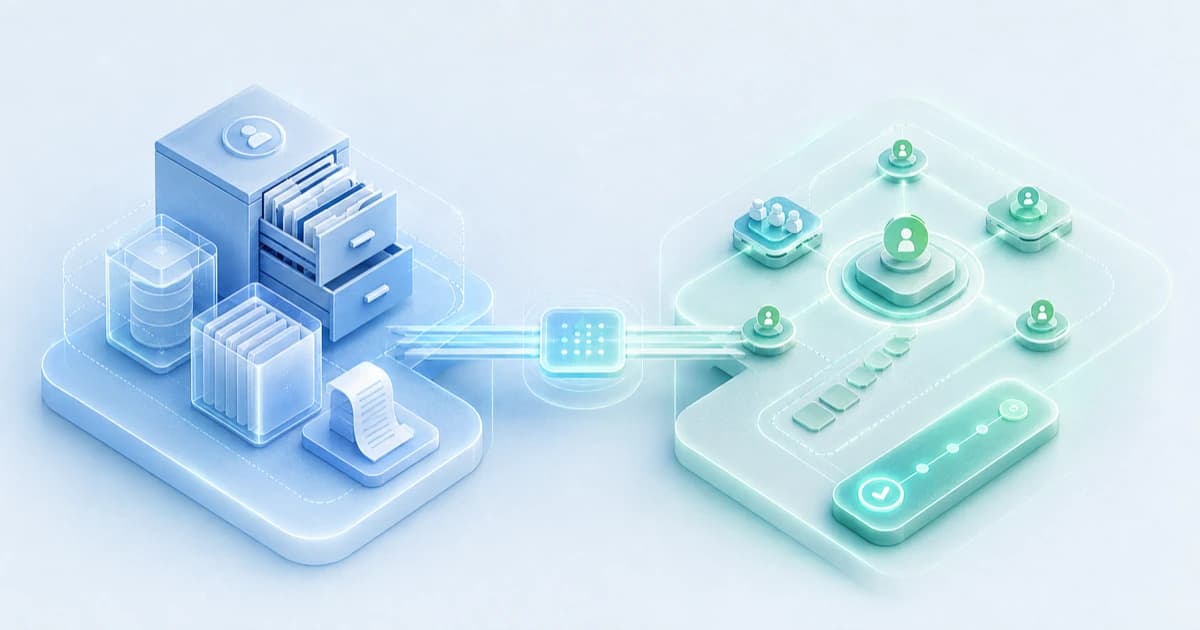
Direct answer: A donor database should be the system of record for constituent identity, gifts, pledges, receipts, campaigns, consent, and fundraising reporting. A nonprofit fundraising CRM can overlap with those jobs, but a relationship-intelligence workspace such as Finta is best used for meetings, board and community pathways, current context, ownership, and reviewed next actions. Many development teams need both. The cleanest stack assigns each record and decision to one accountable system.
Donor database and relationship workspace are different jobs
The phrase nonprofit CRM covers very different products. A full donor management platform may process online gifts, issue receipts, record pledges, reconcile campaigns, manage constituent history, and support fundraising reports. For example, Blackbaud describes Raiser’s Edge NXT as a donor management and fundraising platform with gift processing, receipts, campaigns, constituent records, and reporting.
Finta CRM is built around the working relationship record. It keeps a contact's stage, research, mutual connections, permitted inbox context, ownership, and next move together. Finta Networks helps a team inspect relationship evidence and possible warm paths. These are useful development workflows, but they do not turn Finta into a donation processor, gift ledger, tax-receipting system, grant-management platform, consent registry, or wealth-screening service.
| Job | Donor database should own | Finta can support |
|---|---|---|
| Constituent and gift history | Authoritative donor identity, household rules, gifts, pledges, campaigns, restrictions, and receipts | A permitted contact or organization record linked to current relationship work |
| Relationship context | Selected actions and notes required for the fundraising record | Meetings, permitted communication context, research, owners, mutual connections, and next actions |
| Donation operations | Forms, payment processing, gift entry, acknowledgements, tax receipts, reconciliation, and financial reporting | No replacement role |
| Major-gift workflow | Official opportunity, proposal, gift, and reporting data | Preparation, relationship pathways, meeting context, tasks, and reviewed follow-up |
| Consent and preferences | Authoritative communication choices, restrictions, retention, and policy controls | Use only the context the organization permits; do not override the source system |
| AI assistance | Vendor-specific insights grounded in the donor system | Source-visible research, briefs, summaries, and drafts that remain subject to human review |
When a donor database is the priority
Choose or repair the donor database first when the organization cannot reliably answer who gave, how much, to which campaign or restriction, whether a pledge is open, what receipt was issued, or which communication preference applies. Those are recordkeeping and fundraising-operations problems. A separate relationship tool should not become a shadow gift ledger.
- Define the authoritative constituent identifier and duplicate-management rules.
- Record gifts, pledges, restrictions, acknowledgements, and tax documentation in the designated fundraising system.
- Keep finance reconciliation and official campaign reporting in approved systems.
- Treat consent, suppression, anonymity, and communication preferences as binding controls.
When a relationship-intelligence layer becomes useful
A development team may have accurate gift records and still lose the relationship thread. Board members know potential supporters, program leaders hold context, major gift officers carry meeting notes, and follow-up lives across inboxes and calendars. Finta can help when the immediate question is not simply “What did this person give?” but “What do we know, who owns the relationship, what was promised, and what should be reviewed next?”
- Prepare a meeting from the permitted relationship record, recent communication, calendar context, and approved program material.
- Review possible board or community pathways without treating a visible connection as consent to ask.
- Turn verified commitments into owned tasks and keep an external message as a draft until a person approves it.
- Find active relationships with no dated next action, unresolved question, or accountable owner.
A clean two-system operating model
- Assign ownership: declare which system owns constituent identity, gifts, consent, relationship context, tasks, and communications.
- Minimize copies: move only the fields needed for the approved workflow. Do not duplicate sensitive donor notes by default.
- Preserve source links: keep enough provenance to reopen the authoritative record rather than relying on an AI summary.
- Reconcile deliberately: define who resolves duplicates, conflicts, stale stages, and changed preferences.
- Review every consequential action: donor-facing messages, introduction requests, ask strategy, and record changes remain human decisions.
Worked example: preparing a major-donor meeting
The donor database remains authoritative for giving history, restrictions, household rules, and communication preferences. In Finta, the gift officer reviews the permitted contact record, last meeting, program interest the donor actually expressed, open stewardship commitment, and the board member who may know the donor. Aurora prepares a meeting brief that shows its available sources. The gift officer verifies the facts, removes anything outside the meeting's purpose, and approves the next action. After the meeting, confirmed commitments return to the appropriate systems with clear ownership.
Privacy and fundraising ethics are system requirements
The Association of Fundraising Professionals Code of Ethical Standards calls for accurate communications, proper stewardship, protection of confidential donor information, and respect for donor privacy. Software does not replace those responsibilities. Access, consent, data minimization, retention, and review should be defined before donor information moves between systems.
Questions to ask before choosing the stack
- Which system is the authoritative record for gifts, pledges, receipts, restrictions, and consent?
- Does the team need transaction operations, relationship execution, or both?
- Which staff and board members may see each category of donor and prospect information?
- Can every AI-assisted brief or draft show the evidence available to the reviewer?
- What happens when the two systems disagree or a donor changes a preference?
Related nonprofit fundraising workflows
- Finta for nonprofit development teams
- Research prospective donors and foundations
- Turn donor meetings into stewardship follow-up
- Build and manage a major donor pipeline
Put the relationship work beside the donor system
Keep gift administration in the system designed for it. Use Finta for the approved relationship context, pathways, preparation, and follow-through that help a development team act with continuity. Start a Finta relationship workspace.