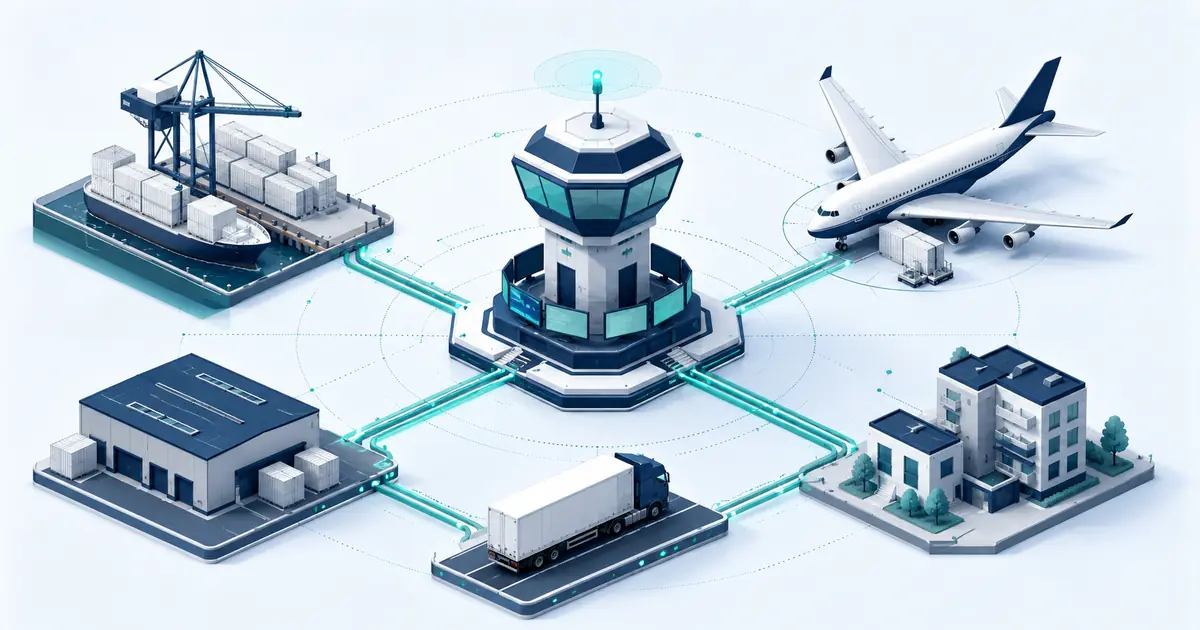
For logistics and supply-chain founders, the 2026 research set includes specialists such as Dynamo Ventures, Ironspring Ventures, Trucks Venture Capital, and Schematic Ventures, along with broader firms that have relevant operating portfolios. The right target depends on whether the business is software, a network, robotics, mobility, warehousing, or an asset-heavy service.
Logistics investors specialize by system, not just sector. Freight software, warehouse robotics, procurement platforms, autonomous vehicles, and cold-chain infrastructure have different sales cycles, margins, technical risks, and capital needs. This list prioritizes funds with a published physical-economy or supply-chain thesis, relevant portfolio evidence, and current activity.
There is no universal ranking. The best investor is the one whose current mandate, stage, geography, ownership model, and portfolio fit align with the company. Use this page as a researched starting point, then confirm current interest directly before sharing confidential information.
Finta research note: We compared dedicated supply-chain investors with sector-relevant industrial and mobility firms, then retained 15 investors supported by current thesis, portfolio, stage, or activity evidence. The research flags public check and lead information when available and leaves those fields undisclosed when the source record is silent.
How we selected these investors
Research was last verified on August 8, 2026. We reviewed investor-controlled thesis, portfolio, team, fund, and transaction pages first. When an official source did not address a material field, we used reputable secondary reporting and labeled the claim accordingly. Inclusion required an explicit mandate or a repeat investment pattern, plus at least one current public signal. A well-known historical deal alone was not enough.
We assessed five factors:
- Sector fit, including the investor's stated thesis and the depth of relevant portfolio evidence.
- Stage fit, published check information, and documented lead or follow behavior.
- Current activity, based on recent investments, fund announcements, or a current investing mandate.
- Founder usefulness, including geographic reach, relevant operating support, and likely partner expertise.
- Evidence quality, with investor-controlled sources preferred over databases and press summaries.
Check sizes and lead behavior appear only when publicly supported. "Not publicly disclosed" means the current sources did not state the field, not that the firm lacks an internal range. We do not estimate remaining dry powder from assets under management, fund size, or a fund announcement. Portfolio examples show experience, not willingness to fund a similar or competing company.
This is a curated research list, not an exhaustive directory or a ranking from best to worst. Investor mandates, partner coverage, conflicts, and capacity can change after the research date. Confirm fit directly before sending confidential information or relying on a stated range.
Compare 15 logistics and supply-chain investors
| Investor | Verified stage | Public check size | Strongest fit | Lead or follow evidence | Recent signal |
|---|---|---|---|---|---|
| Dynamo Ventures | Inception through seed | Not publicly disclosed | Supply chain, logistics, mobility and the physical economy | Not publicly disclosed | Current mandate verified in 2026; recent deployment date not located |
| Ironspring Ventures | Pre-seed and seed | Not publicly disclosed | Supply chain, logistics, construction | Leads or co-leads | Current mandate verified in 2026; recent deployment date not located |
| Trucks Venture Capital | Early stage | Not publicly disclosed | Transportation, autonomy, logistics | Not publicly disclosed | Current mandate verified in 2026; recent deployment date not located |
| Schematic Ventures | Early stage | Not publicly disclosed | Supply chain, manufacturing, logistics and software infrastructure | Not publicly disclosed | Current mandate verified in 2026; recent deployment date not located |
| Construct Capital | Seed and Series A | Not publicly disclosed | Manufacturing, logistics, supply chain and industrial technology | Not publicly disclosed | Current mandate verified in 2026; recent deployment date not located |
| UP.Partners | Venture stage, exact range not stated | Not publicly disclosed | Mobility, logistics, advanced manufacturing | Not publicly disclosed | Current mandate verified in 2026; recent deployment date not located |
| Eclipse | Early stage through growth | Not publicly disclosed | Manufacturing, supply chain, industrial software | Not publicly disclosed | Current mandate verified in 2026; recent deployment date not located |
| Supply Chain Ventures | Early and later venture stages | Not publicly disclosed | Planning, execution, logistics | Not publicly disclosed | Current mandate verified in 2026; recent deployment date not located |
| Menlo Ventures | Early stage, with selected later support | Not publicly disclosed | Supply chain, automation, AI | Not publicly disclosed | Current mandate verified in 2026; recent deployment date not located |
| Prologis Ventures | Seed through growth | Not publicly disclosed | Supply-chain logistics, warehouse automation, transportation and real-estate technology | Not publicly disclosed | Current mandate verified in 2026; recent deployment date not located |
| Supply Change Capital | Early stage | Not publicly disclosed | Food supply chain, logistics, automation | Not publicly disclosed | 2026: current official portfolio reports 2025 impact metrics across active companies |
| Fontinalis Partners | Pre-seed, seed, and Series A | Not publicly disclosed | Mobility, industrial innovation, energy | Official source confirms lead activity | 2026: current official strategy and portfolio pages confirmed active early-stage investing |
| Maersk Growth | Invests and partners across stages; exact investment range not stated | Not publicly disclosed | Trade, transport, logistics | Not publicly disclosed | Current mandate verified in 2026; recent deployment date not located |
| 8VC | Early stage | Not publicly disclosed | Logistics, manufacturing, enterprise | Not publicly disclosed | 2026: official firm site showed new investment announcements and an active logistics practice |
| Motion Ventures | Early stage through growth | $250,000 to $10 million | Maritime, ports, shipping | Not publicly disclosed | 2025: Fund II launched with OceanScore and Fernride among initial investments |
Why each logistics investor may fit
Dynamo Ventures
Dynamo is a specialist at the earliest company stages and has a portfolio across freight, warehousing, autonomy, and supply-chain software. Relevant portfolio examples are Stord, Gatik, sennder.
Ironspring Ventures
Ironspring publishes a clear early-stage and lead mandate for founders modernizing foundational industries. Relevant portfolio examples are Solvento, Prokeep, Cargado.
Trucks Venture Capital
Trucks VC is a focused early investor for transportation systems where hardware, regulation, and physical operations matter. Relevant portfolio examples are Gatik, Bear Flag Robotics, Skyryse.
Schematic Ventures
Schematic is purpose-built for early companies modernizing supply chains and industrial operations. Relevant portfolio examples are Flock Freight, Outrider, Altana.
Construct Capital
Construct focuses on software and technology reshaping foundational industries, with relevant operating pattern recognition. Relevant portfolio examples are Copia Automation, Hadrian, Veho.
UP.Partners
UP.Partners is relevant when a startup connects software, automation, and physical infrastructure in transportation or logistics. Relevant portfolio examples are REPOWR, Plus One Robotics, Teleo.
Eclipse
Eclipse's firm-wide physical-industries thesis makes it a fit for capital-intensive systems that many software generalists avoid. Relevant portfolio examples are Bright Machines, Augury, Forterra.
Supply Chain Ventures
Supply Chain Ventures is a domain specialist with broad coverage of software across supply-chain design and execution. Relevant portfolio examples are LeanLogistics, Kuebix, Freightos.
Menlo Ventures
Menlo maintains a dedicated supply-chain and automation practice with public stage evidence for individual investments. Relevant portfolio examples are 6 River Systems, Alloy, CloudTrucks.
Prologis Ventures
Prologis Ventures can bring strategic warehouse and logistics context plus a global operating ecosystem, but founders should evaluate strategic alignment. Relevant portfolio examples are Gaussy, Gideon, Outrider.
Supply Change Capital
Supply Change is a specialist for food and agriculture supply chains, where biology, operations, and distribution intersect. Relevant portfolio examples are Cargologik, Helios AI, Loamy.
Fontinalis Partners
Fontinalis publishes a clear early-stage strategy and has deep roots in mobility and the efficient movement of goods. Relevant portfolio examples are Gatik, Elementum, Automotus.
Maersk Growth
Maersk Growth offers strategic access to a global logistics operator, including assets, customers, data, and domain expertise. Relevant portfolio examples are Forto, Loadsmart, WasteFuel.
8VC
8VC has a dedicated logistics thesis and a partner-led practice focused on transportation and supply chains. Relevant portfolio examples are Loop, Terminal Logistics, Outrider.
Motion Ventures
Motion Ventures has a current maritime fund, a disclosed check range, and a strategic consortium spanning the shipping value chain. Relevant portfolio examples are OceanScore, Fernride, Freightify.
How to choose the right logistics investor
Define the operational bottleneck and the person who owns its budget. Show baseline cost, time, error, utilization, or service level before claiming improvement. Hardware founders should separate prototype performance from deployment reliability and working-capital needs. Software founders should prove integration depth, implementation time, retention, and whether savings survive outside a pilot.
Build a short list by scoring each investor on thesis, stage, geography, check compatibility, relevant partner, portfolio conflict, and ability to help with the next milestone. The operating proof most likely to matter in this category includes utilization, on-time delivery, cost per shipment or unit, implementation time, retention, gross margin, hardware reliability, payback, working capital, and expansion across sites or lanes. Confirm who actually owns the thesis before requesting an introduction.
Round context matters. Compare this list with our investor pages for pre-seed, seed, Series A, Series B, and Series C. Geography can narrow the set further, including Chicago investors and Singapore investors. For planning the process itself, use the pre-seed fundraising guide, seed fundraising guide, Series A fundraising guide, Series B fundraising guide, and Series C fundraising guide.
What to verify before outreach
A sector logo does not prove comfort with the same asset intensity or go-to-market motion. Ask whether the firm has financed comparable hardware, fleets, working capital, or multi-site deployments. For strategic investors, clarify procurement timelines, data rights, commercial exclusivity, and whether the relationship could complicate sales to competitors.
Frequently asked questions
What proof matters beyond a logistics pilot?
Investors look for sustained savings or service improvement, integration reliability, repeat deployment, expansion across sites or lanes, and evidence that implementation burden does not erase the customer's return.
How many investors should a founder contact?
Start with a qualified first wave, usually 20 to 40 firms. Run outreach in parallel, compare feedback, then expand from a researched reserve list. Fit and warm context usually matter more than raw volume.
What if an investor does not publish a check size?
Ask whether the raise and desired ownership fit the current strategy. Old database estimates and prior rounds can inform a question, but they are not verified current policy.
How should asset-heavy logistics startups plan financing?
Separate company equity from vehicles, equipment, inventory, or project assets. Leasing, equipment debt, customer commitments, strategic capital, and project structures can reduce dilution when revenue and asset risk are predictable.
Build a more precise investor list with Finta
Finta helps founders turn a broad market map into a ranked outreach workflow. Use your stage, sector, location, round size, traction, and network to identify higher-fit investors, prepare the raise, and manage follow-up. Build your investor target list with Finta.
Editorial review and disclosure
Reviewed by Kevin Siskar, CEO of Finta, an early-stage investor and founder-education operator. The Finta Editorial Team researched and edited this page using the sources listed below. Investor inclusion is an independent editorial decision and is not paid placement.
This article provides general fundraising information, not legal, tax, investment, or regulatory advice. Confirm a firm's current mandate, partner ownership, conflicts, and process directly before acting on the information.
Sources
- Dynamo Ventures official source; supporting source
- Ironspring Ventures official source; supporting source
- Trucks Venture Capital official source
- Schematic Ventures official source
- Construct Capital official source; supporting source
- UP.Partners official source; supporting source
- Eclipse official source; supporting source
- Supply Chain Ventures official source; supporting source
- Menlo Ventures official source
- Prologis Ventures official source
- Supply Change Capital official source; recent activity source
- Fontinalis Partners official source; supporting source
- Maersk Growth official source; supporting source
- 8VC official source; supporting source; recent activity source
- Motion Ventures official source; supporting source