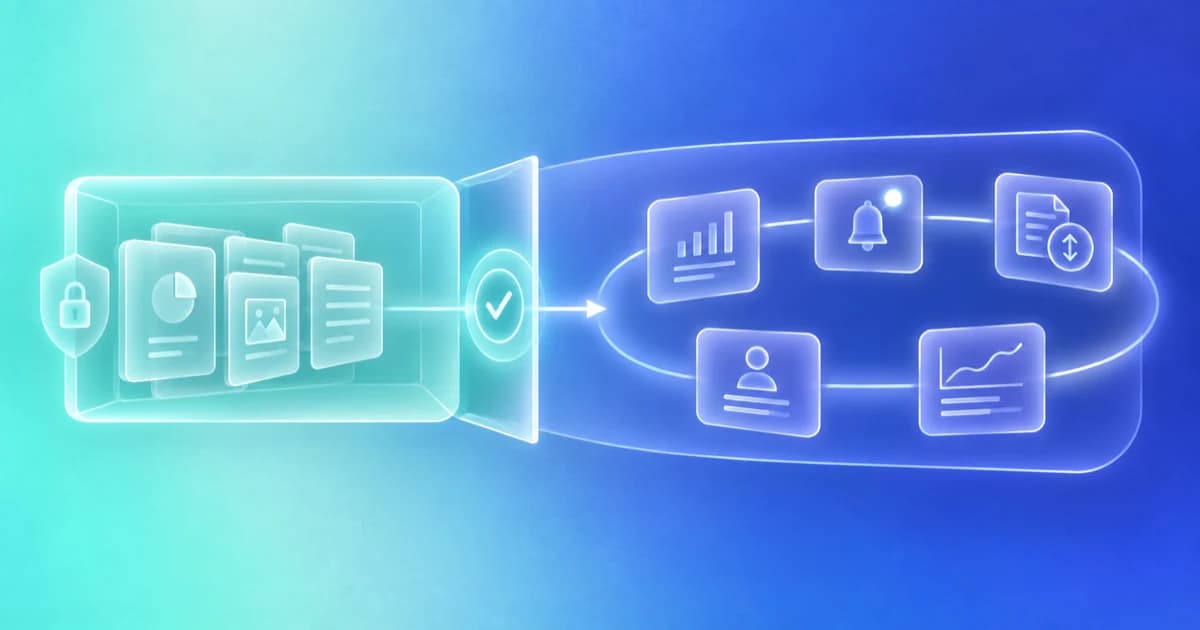
A data room supports diligence; an investor portal supports the ongoing relationship
A data room is usually a time-bounded workspace for reviewing an opportunity and its supporting materials. An investor portal is an ongoing service environment where existing investors access investment information, reports, notices, documents, account details, and other post-close workflows.
Fund managers and real estate sponsors may need both. A startup raising a venture round often needs a well-run data room, but usually does not need to build a fund-style investor portal.
The direct comparison
| Question | Data room | Investor portal |
|---|---|---|
| Primary job | Help a prospective investor evaluate a company, fund, asset, or transaction | Serve investors and administer communications across the investment lifecycle |
| Main audience | Prospective investors, advisers, counsel, and diligence participants | Existing LPs, investors, investor-relations staff, finance, and administrators |
| Typical period | Fundraising, diligence, transaction, or closing window | From onboarding and close through reporting, capital events, and exit |
| Typical content | Pitch materials, financials, governance, legal support, diligence responses | Statements, capital account information, notices, tax documents, reports, account updates, and portfolio information |
| Core workflow | Controlled disclosure and request resolution | Recurring investor service, reporting, account maintenance, and communication |
| Activity context | Visits, documents, questions, and staged access where supported | Logins, communications, report access, account actions, and ongoing service events where supported |
| Operational owner | Fundraising or deal team, with finance and legal review | Investor relations, finance, operations, and fund administration |
The exact boundary varies by product. Some private-markets platforms connect CRM, data rooms, subscriptions, reporting, and a portal in one suite. That does not make the terms interchangeable.
Use a data room before the investment decision
A fundraising data room should help the recipient answer:
- What is the opportunity?
- What evidence supports the claims?
- What material risks and open questions remain?
- Who owns each answer?
- Which version is current?
- What is the next diligence step?
The data room due diligence checklist covers commonly requested categories. The room can reveal those materials in stages rather than treating every prospect as if it has entered full diligence.
The data room ends, changes purpose, or becomes an archive when the investor passes, the transaction closes, or the approved materials move into another operating system.
Use an investor portal for recurring post-close service
An investor portal is designed for a different set of questions:
- What do I own or participate in?
- What notices, reports, or tax documents are available?
- What capital calls, distributions, transactions, or account actions affect me?
- How do I update my profile or payment information?
- Where can I find the current communication from the manager?
Juniper Square's current Portal page describes fundraising, onboarding, reporting, investor communications, investment information, self-service account updates, documents, and activity in one ongoing system. AngelList's published fund-administration scope describes an investor portal for investments, valuations, documents, reports, filings, and updates, alongside subscription, KYC/AML, commitments, capital calls, and distributions.
Those examples demonstrate why a portal is more than a persistent data room. They do not define every portal or imply that every fund needs the same operating stack.
Decide using the lifecycle boundary
You probably need a data room when
- a founder is opening diligence for a financing round;
- a GP is sharing fund materials with prospective LPs;
- a sponsor is sharing offering and property materials;
- a buyer, lender, or co-investor needs a controlled set of transaction documents;
- the process has a clear beginning, decision, and end.
You probably need an investor portal when
- closed investors need recurring statements and notices;
- LPs must see capital balances, calls, distributions, or tax documents;
- investors update account, payment, or regulatory information;
- the manager needs a durable communication and reporting environment;
- fund operations continue well beyond the fundraising room.
You may need both when
- prospects move from fundraising into subscriptions and ongoing service;
- a real estate sponsor runs repeated offerings and maintains long-term investor relationships;
- the administrator or operating platform connects pre-close and post-close records;
- access, document, and reporting responsibilities pass from the fundraising team to investor relations and operations.
Map the handoff explicitly. Do not leave a closed investor in a prospect room when a different system owns the official post-close record.
A practical handoff map for fund managers
| Stage | Primary environment | Required handoff |
|---|---|---|
| Prospecting | CRM and relationship workflow | Record fit, owner, permission, and next step |
| Initial review | Approved overview or Share Page | Track which version and access path were used |
| Active diligence | Fundraising data room | Resolve requests and preserve approved answers |
| Subscription and closing | Designated legal, onboarding, and administration workflow | Transfer only approved identities, documents, and commitments |
| Ongoing investor service | Investor portal and fund-administration stack | Publish reports, notices, and account information through the authoritative system |
| Relationship follow-through | Investor CRM | Keep meetings, questions, promises, and next actions with their owners |
Finta can participate in the prospecting, fundraising-room, and relationship-follow-through stages. It should not be described as the system that performs every post-close job.
Synthetic example
Meridian Ventures is raising Fund I.
- The GP tracks prospective LP relationships and meetings in its CRM.
- Qualified prospects receive staged access to a fundraising Share Page containing the approved deck, strategy, team, operating plan, track record support, and counsel-approved offering materials.
- Open diligence requests are assigned to finance, counsel, or the GP.
- A prospective LP communicates a conditional allocation. The GP records the state accurately rather than calling it closed capital.
- The LP enters the fund's designated subscription, identity, and closing process.
- After closing, the fund administrator's portal becomes the official place for statements, capital calls, distributions, tax documents, and account maintenance.
- The GP continues to preserve relationship context and follow-up in the CRM without duplicating the portal's authoritative records.
The handoff protects both systems: the data room remains focused on evaluation, and the portal remains focused on ongoing service.
Common mistakes
Calling a folder an investor portal
A shared folder can distribute files, but it does not automatically provide investor-level reporting, account information, communications, or post-close operations.
Building portal features before fixing the fundraising room
A polished post-close portal does not repair a confusing investment case, missing diligence evidence, or poorly owned prospect follow-up.
Using a fundraising room as the official fund record
The portal, administrator, accounting system, counsel, bank, or another designated provider may own post-close records. Do not make a general-purpose room authoritative by habit.
Treating a portal login as satisfaction or intent
Activity can inform service, but it does not establish whether an investor is satisfied, likely to recommit, or prepared to make another allocation.
Assuming one product covers every obligation
Review actual provider scope, contractual responsibilities, integrations, security controls, and operating ownership. Product labels are not substitutes for that review.
How Finta fits
Finta Share Pages can support a controlled fundraising and diligence experience with approved materials, public or identified access options, and supported engagement context. Finta CRM can keep investor relationship history and next actions connected to the fundraising process.
Finta does not replace fund administration, fund accounting, subscriptions, KYC/AML, capital calls, distributions, tax reporting, investor servicing, or the official investor portal. For GP-specific relationship work, see Finta for emerging fund managers. For the fundraising room itself, use the AI fundraising data room solution.
Sources and review notes
- Juniper Square Portal, reviewed September 14, 2026
- AngelList full-service fund-administration scope, reviewed September 14, 2026
- Finta Share Pages, reviewed September 14, 2026
- Finta CRM, reviewed September 14, 2026
This article explains product categories and operating boundaries. It is not legal, accounting, tax, investment, security, or compliance advice. Verify the scope of each provider and assign authoritative ownership before relying on a system.