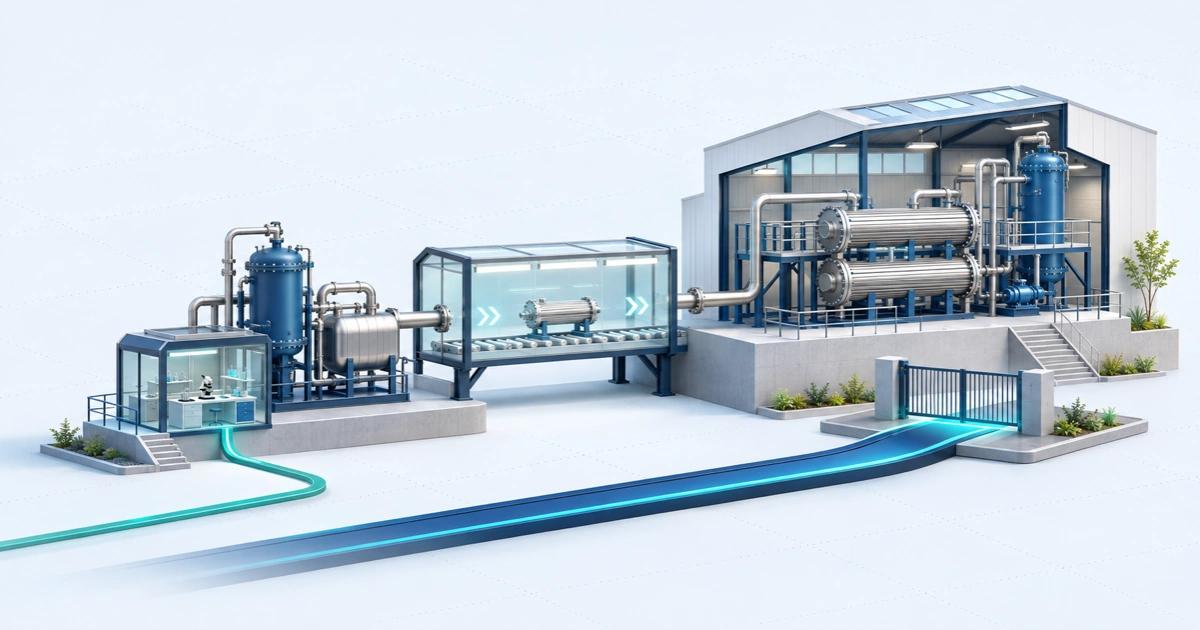
A climate startup can have a promising technology and still face a financing gap at its first commercial demonstration. The problem is often not simply “find more climate investors.” It is match the capital to the company, asset and risk that need funding.
These 15 capital-provider routes span company equity, catalytic capital and deployment-focused investment. They are not 15 interchangeable project lenders. Some belong before a demonstration; others become relevant when commercial and asset evidence is stronger.
Match climate capital to the demonstration risk
First separate the company's operating needs from the demonstration asset. Hiring engineers and improving the core technology may call for company capital. Developing and building a facility introduces different counterparties, construction milestones and operating risks. Some providers can address both, but that must be established rather than assumed.
What is FOAK financing?
FOAK means first of a kind. In this context, financing supports an early commercial application of a technology or system that does not yet have a long operating track record. The financing challenge may involve technical performance, execution, customer demand or a combination.
There is no single universal FOAK instrument. A plan may involve venture equity, catalytic investment, project-development capital or asset-focused finance, each with its own criteria. The founder's job is to identify which uncertainty each capital source can credibly address, with qualified advisers handling transaction-specific terms.
Compare climate demonstration capital routes
The profiles explicitly distinguish company investment from project and asset strategies. A public thesis supports investigation, not a funding commitment. Confirm the current vehicle, geography, entry stage and application window directly.
| Investor | Product focus | Stage or route | Geographic filter |
|---|---|---|---|
| Elemental Impact | Energy, industry, transport, water and other climate systems | Project Track: Series A and beyond; Strategy Track is earlier | Worldwide companies; confirm participation and project conditions |
| Spring Lane Capital | Decentralized low-carbon assets | Asset deployment and scaling; confirm readiness requirements | Confirm eligible project jurisdiction and structure |
| Prime Coalition through Trellis Climate | Novel climate infrastructure | FOAK project development and commercial scaling | Confirm project-country eligibility |
| DCVC | Climate technologies and industrial systems | Company capital; confirm climate strategy and entry stage | Confirm company and project-market scope |
| Engine Ventures | Scientific and industrial technology | Company formation and commercialization; confirm current entry round | Confirm company-country and operating requirements |
| Clean Energy Ventures | Proven science with large decarbonization potential | Early company commercialization; confirm entry stage | Confirm company and market geography |
| Extantia | Industrial software and hardware | Seed to Series A | Primarily Europe |
| World Fund | Energy, industry, food and agriculture | Confirm current company-stage and investment criteria | Europe-focused |
| At One Ventures | Physical technologies with better industrial economics | Company investment; confirm current entry stage | Confirm company and deployment geography |
| AP Ventures | Energy-intensive industries, materials and industrial processes | Early-stage | Investing globally; confirm company eligibility |
| Clean Growth Fund | IP-rich hardware and software reducing emissions or improving resources | Seed and Series A | UK-based innovations |
| Overture | Energy, resilience, AI and industrial transformation | Early-stage company investment | US policy and government-support context; confirm entity eligibility |
| Gigascale Capital | Physical systems across energy, factories and infrastructure | Early-stage company investment | Confirm company-country eligibility |
| Ara Partners | Industrial decarbonization and lower-carbon assets | Commercialization, scaling and infrastructure; not a generic seed fund | Confirm strategy-specific geography |
| Climate Investment | Decarbonization technologies and industrial adoption | Early through growth company investment | Global industrial adoption; confirm fund and company scope |
Read provider criteria and approach routes
1. Elemental Impact
Catalytic investor with project and company tracks. Elemental's Project Track explicitly targets first- and early-of-a-kind commercial facilities, distributed assets and new geographies. Its earlier Strategy Track is different. Match the application to the company and project milestone, including an operating prototype and team requirements, rather than assume every climate startup qualifies for project capital.
Founder route: Review current funding opportunities. Official criteria.
2. Spring Lane Capital
Sustainable real-asset investment firm. Spring Lane focuses on the financing gap for sustainable real assets. It is a different conversation from a seed check paying for unresolved laboratory work. Bring a concrete asset deployment plan, commercial counterparties and the remaining risk allocation questions. Ask which company and project capital the current strategy can provide.
Founder route: Use the official founder contact route. Official criteria.
3. Prime Coalition through Trellis Climate
Catalytic capital platform. Trellis Climate explicitly addresses first-of-a-kind deployment with risk-tolerant catalytic investment. Prime evaluates climate impact, additionality and commercial potential. Explain why conventional capital is not yet sufficient and which specific investment would remove the bottleneck. Count Trellis within Prime once, rather than padding the list with programme aliases.
Founder route: Follow the Trellis Climate route on Prime's official site. Official criteria.
4. DCVC
Deep-tech venture investor. DCVC's 2024 Climate Impact Report describes mid-stage company financing associated with first-of-a-kind projects and facilities. Its current firm strategy continues to emphasize deep tech and climate. Treat that as evidence to investigate the relevant team, not a standing project-loan offer or a claim that every demonstration qualifies.
Founder route: Review the relevant climate investment team. Official criteria · Supporting official evidence.
5. Engine Ventures
Tough-tech venture investor. Engine Ventures invests capital in tough-tech companies and brings technical and commercial expertise. It is separate from The Engine's nonprofit incubator and accelerator. Keep company investment and facility or incubation support distinct, and explain the demonstration evidence this financing would create.
Founder route: Use Engine Ventures' official Contact route. Official criteria.
6. Clean Energy Ventures
Climate venture investor. CEV emphasizes proven science, technical diligence and a clear path to commercial scale. A demonstration plan should therefore connect the technology evidence to capital efficiency, market demand and climate impact. Do not describe this company-investment route as an automatic project-finance facility.
Founder route: Contact Clean Energy Ventures. Official criteria · Supporting official evidence.
7. Extantia
Climate venture investor. Extantia publishes a seed-to-Series-A focus and support for commercialization. This may fit the company preparing a first deployment, but the fund's venture capital is not interchangeable with construction or asset finance. Identify the operating milestone, customer evidence and remaining project-capital need.
Founder route: Pitch Extantia. Official criteria.
8. World Fund
European climate deep-tech venture investor. World Fund's current thesis connects decarbonization with European industrial technology. Use its official criteria to test the company's geography, technology and commercial ambition. A portfolio company that built a plant is not proof that the fund will finance an unrelated first facility. Ask which company-level risk it can back.
Founder route: Use the official Pitch us route. Official criteria.
9. At One Ventures
Climate and deep-tech venture investor. At One focuses on disruptive deep tech that changes industrial economics while reducing environmental footprint. Its team explicitly discusses commercializing physical technologies. Show why the demonstration tests both performance and economic advantage, while keeping projected unit costs clearly separate from measured results.
Founder route: Use the official founder contact route. Official criteria.
10. AP Ventures
Industrial technology venture investor. AP Ventures' current scope covers technologies reshaping the industrial economy, with technical and commercial milestones central to its approach. It is broader than an older hydrogen-only description. Explain how the pilot or first deployment makes a difficult industrial application credible; do not assume it funds an entire project asset.
Founder route: Use the official founder contact route. Official criteria.
11. Clean Growth Fund
Climate venture investor. Clean Growth Fund explicitly combines early-stage company capital with a UK geography requirement. This is a useful filter before a founder spends time tailoring a deck. Link the planned demonstration to commercialization and climate impact, and ask how the remaining deployment capital should be addressed.
Founder route: Review the official Apply for funding route. Official criteria.
12. Overture
Early-stage venture investor. Overture combines capital with policy and government-affairs expertise. That can be relevant where deployment depends on permitting, public procurement or policy support, but investment does not guarantee an award or approval. Keep the private round, public funding applications and project execution obligations separate.
Founder route: Use the official founder contact route. Official criteria.
13. Gigascale Capital
Early-stage climate deep-tech venture investor. Gigascale's current thesis explicitly recognizes pilot plants as the minimum viable product for some physical systems. Frame the demonstration as an engineering, commercial and operational learning milestone, not a miniature version of a fully de-risked plant. Confirm the current approach route and round fit with the team.
Founder route: Use the official founder contact route. Official criteria.
14. Ara Partners
Private-equity and infrastructure investment firm. Ara separates private-equity investment in industrial businesses from infrastructure investment in physical assets. This is a later-readiness route for a qualifying commercialization plan, not a substitute for pre-seed R&D funding. Identify the actual strategy, commercial evidence and build-out requirements before approaching the team.
Founder route: Contact Ara about the relevant strategy. Official criteria · Supporting official evidence.
15. Climate Investment
Venture-to-growth equity investment firm. Climate Investment describes venture-to-growth company equity and support for commercial adoption. It is an independent organization whose funds include OGCI member investors. Count the current platform once rather than treating OGCI and Climate Investment as separate checks. Industrial relationships do not guarantee a pilot or customer contract.
Founder route: Apply for investment. Official criteria.
Build a funding-gap matrix before approaching investors
List each work package, its cost assumptions and the evidence it produces: technology validation, site preparation, engineering, procurement, commissioning or customer operation. Then name the commercial dependency and the capital category you are investigating. Avoid presenting one undifferentiated “plant budget” as a venture round.
Keep projected performance separate from measured performance. Keep customer interest separate from contracted demand. Keep a prospective grant separate from committed capital. Those distinctions make an investor discussion more credible and reveal which dependency must be solved next.
A worked example for an industrial heat startup
Fictional example: A team has validated a heat-storage module in a controlled setting and wants a first customer demonstration. It divides the plan into company engineering, demonstration integration and later repeat deployments. It records which performance has been measured and which economics remain assumptions.
The team investigates company-investment routes such as Gigascale or Clean Energy Ventures, alongside Elemental's project criteria if the company's actual stage and conditions fit. It treats Trellis as a separate catalytic-capital fit question. It does not assume Spring Lane or Ara will finance an unproven asset just because both invest in deployment. Each conversation receives a specific risk question and a current source.
Copy the demonstration capital worksheet
Organize providers, evidence, counterparties and next actions in Finta. Keep the company round and the demonstration work connected without treating their funding as interchangeable.
FIRST COMMERCIAL CLIMATE DEMONSTRATION CAPITAL MAP
Company / technology / current operating stage:
Demonstration site and customer decision owner:
Existing measured performance:
Assumptions still to validate:
Work package / timing / cost assumption / evidence produced:
Company operating needs versus demonstration asset costs:
Technical / execution / commercial / policy risk:
Customer commitment: interest / pilot agreement / contract / unknown
Provider / exact strategy or fund:
Capital route: company equity / catalytic / project / asset / confirm
Published entry stage and geography:
Application conditions and current window:
Official source / source date / checked date:
Dependencies before a financing decision:
Qualified adviser questions on transaction terms:
Next action / responsible owner / review date:
Ask Aurora, Claude or Codex to review your shortlist
Supply your facts and the official sources. Review the result before acting; this is a research aid, not automatic outreach.
Review this first-commercial climate demonstration funding map using only my facts and the current official provider sources. Separate company equity, catalytic project capital and asset deployment finance. Identify which technical, execution and commercial risks each route might address. Do not imply all listed investors are project lenders, accept pre-seed companies or cover every geography. Distinguish measured results from assumptions and customer interest from contracts. Flag inactive windows, old programme names and unknown conditions. Return an evidence-gap matrix and precise questions for providers and qualified advisers. Do not recommend personal investments, structure a transaction or send outreach.Methodology and related resources
The Finta Editorial Team reviewed investor-controlled strategy, funding and contact pages, with Prime's FOAK materials and DCVC's dated Climate Impact Report supplying mechanism-specific context. Each platform is counted once. General climate funds are labeled as company-capital routes rather than misrepresented as dedicated FOAK project financiers. Research checked November 13, 2026.
Use our hardware commercialization funding guide for the broader milestone process and the seed fundraising comprehensive guide for organizing a company round.
This is general educational and organizational information, not personalized financial, legal or tax advice. Transaction structure, permitting and project obligations require qualified professional advice.