What does a purchase-order financing company do?
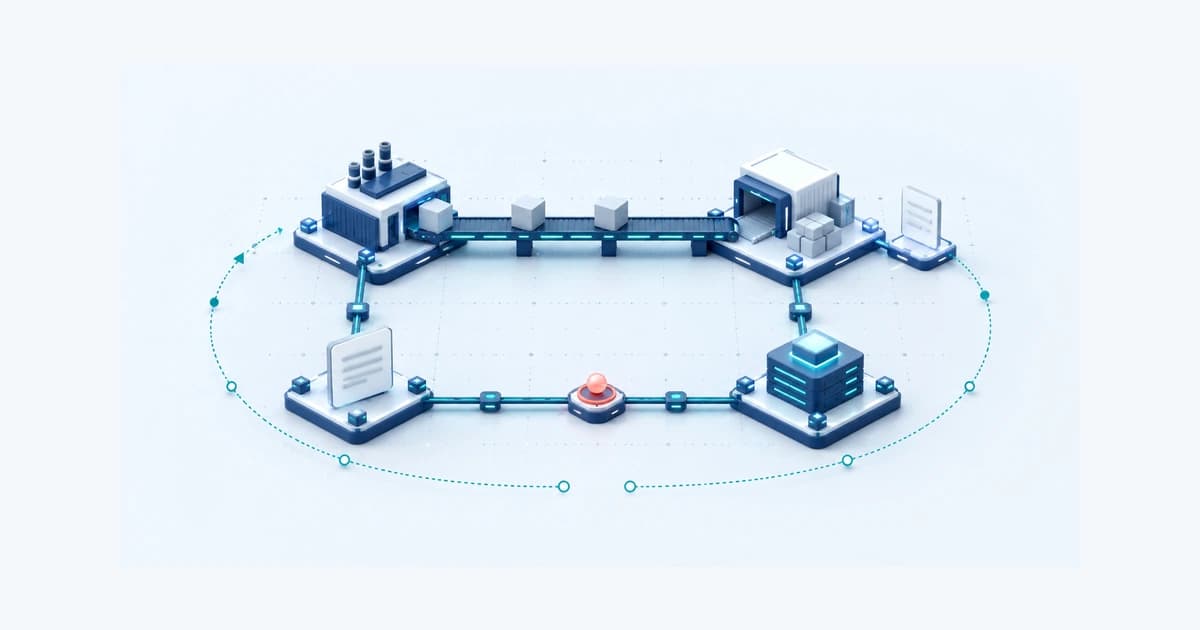
Purchase-order financing addresses a gap before delivery: a supplier has a customer order but needs money to pay for goods or production. Depending on the actual arrangement, a financing provider may pay a supplier, coordinate trade finance and recover its advance through customer payment or a later receivables-financing step. The contract determines the details.
This guide provides 15 published PO and related trade-finance starting points, plus an order worksheet that separates the customer, supplier, seller and funder. It is for businesses trying to fulfill a confirmed order, not a promise that every purchase order can be financed.
For example, STAR Funding's FAQ discusses the information involved in funding an order. SouthStar describes a PO-to-receivables sequence. Those routes illustrate why the handoff matters as much as the initial cash gap.
Use the four-party order worksheet
| Party or step | Evidence to organize | Question that stays open |
|---|---|---|
| Customer | Order, buyer identity, acceptance terms, payment timing and known cancellation rights | Will the provider accept this buyer and these terms? |
| Supplier | Quote, payment request, capacity, production schedule and delivery obligations | Will the provider fund this supplier and cost category? |
| Your business | Role in the sale, gross-margin assumptions, existing financing and obligations | What contribution, security or recourse does the proposal require? |
| Delivery and repayment | Shipment, inspection, invoice, customer collection and any factor handoff | What triggers repayment, and who controls each payment? |
An order is evidence of a commercial request, not evidence of lender approval or guaranteed customer collection. Confirm whether it is cancellable, conditional or dependent on inspection. Mark the source for every assumption rather than presenting the customer's expected payment as money already available.
Ask about the specific structure. An inventory facility, a letter of credit, factoring and a PO-finance advance may solve different parts of the same transaction. They are not interchangeable names for one universal product.
15 purchase-order and related financing routes
The linked primary pages were reviewed on October 2, 2026. Rows describe a published route and a useful next question. White Oak's broader supply-chain product and SMB Compass's financing-platform route are labeled rather than represented as identical standalone PO funds.
| Company and primary source | Published route | Question to establish fit |
|---|---|---|
| King Trade Capital | Purchase-order and trade-cycle financing | How do customer credit, supplier capacity and repayment work together? |
| SouthStar Capital | PO financing connected to receivables financing | What changes when goods are delivered and an invoice is created? |
| 1st Commercial Credit | PO financing with a factoring relationship | Is an existing factoring arrangement required for this order? |
| STAR Funding | PO funding and factoring | Which supplier, production and customer records must be verified? |
| Gateway Trade Funding | PO and export financing for pre-sold goods | How would your facility work with our bank or factor? |
| Express Trade Capital | PO financing within a trade-finance platform | Who pays the supplier, and who collects the customer invoice? |
| Liquid Capital | PO financing in a receivables-finance network | Which local entity evaluates this transaction and geography? |
| DSA Factors | PO financing connected to invoice factoring | What evidence supports production, delivery and the invoice handoff? |
| PurchaseOrderFinancing.com | Purchase-order financing for suppliers and resellers | Who is the actual contracting funder, and where can it finance? |
| Capstone Corporate Funding | PO financing for pre-sold goods | What customer acceptance and supplier-payment conditions apply? |
| Tradewind Finance | PO financing within broader trade-finance services | Which trade-finance product fits this order and country pair? |
| Vicsar Global Finance | Supplier-payment PO financing | How are supplier payment, shipping and customer collection documented? |
| Eagle Business Credit | PO finance and invoice-factoring handoff | What happens between supplier payment and the funded invoice? |
| White Oak Commercial Finance | Supply-chain finance for contracts and purchase orders | Is the proposed facility PO-specific or a broader supply-chain arrangement? |
| SMB Compass | Financing-platform PO route | Are you the funder or arranging a proposal from another provider? |
Provider groups and networks are counted once. Before submitting sensitive records, establish who is actually originating the transaction, who signs the agreement and whether an intermediary is arranging another provider's offer. That answer also tells you whose proposal, fees and document requests to compare.
Read the handoff, not just the headline fee
Map the transaction from supplier payment to final customer collection. Ask the provider to explain the quote using the actual expected dates, including delays. Do not assume a website example matches your shipment or payment cycle.
- Which supplier costs, deposits, freight, inspection or other expenses are included?
- Which costs remain the business's responsibility?
- When does the fee period begin and end, and what changes if delivery is late?
- Does the proposal require factoring or an additional financing agreement?
- What happens if goods are rejected, the order is reduced or the buyer pays late?
- Who receives customer funds, and how is the remaining balance reconciled?
These are questions to take to the provider and relevant advisers, not statements about the legal or accounting effect of a facility. Avoid assuming “no debt,” “off balance sheet” or “no risk” from a promotional description. Your agreement and circumstances need their own review.
Synthetic example: a supplier receives a larger order
Synthetic example: a supplier receives a $200,000 order. The supplier quote is $120,000 and the business expects $20,000 of freight-related costs. The customer expects delivery before it starts its payment period.
The owner records these numbers as order and cost assumptions, not a financing offer. The worksheet identifies missing inspection terms, the supplier's required payment date and whether the freight estimate is documented. The owner also records an existing receivables facility that a new provider would need to understand.
One provider asks for the customer order and supplier quote. Another asks how delivery will become an accepted invoice. Both conversations are relevant, but neither resolves the same questions yet. The owner requests written clarification about covered costs, the invoice handoff, fees, customer collection and remaining business obligations.
The example deliberately does not calculate a financing advance, net profit or borrowing cost. No provider has quoted terms. Its useful artifact is a four-party evidence map that prevents a $200,000 order from being mistaken for $200,000 of cash.
Turn the order into an organized provider conversation
A CRM can connect the buyer, supplier, financing contact and requested records. Keep each provider's confirmed answers beside the original order assumptions, and assign the next question to a person. Aurora can help summarize those records or draft a follow-up for review; it does not approve the order or financing.
Start with a focused shortlist whose published routes are relevant to your goods, geography and transaction. A smaller set of documented conversations is more useful than sending the same incomplete request to every company in a directory.
Methodology and limitations
Finta reviewed the linked first-party product pages on October 2, 2026. Inclusion required a published PO-finance or clearly labeled adjacent route, not only a glossary definition. The list is selected, not exhaustive or ranked. Terms, territories, goods, minimums and current intake vary. The worksheet and supplier example are original educational tools. They do not establish eligibility, profitability, legal treatment or approval. Confirm the actual product, counterparty and proposal directly.