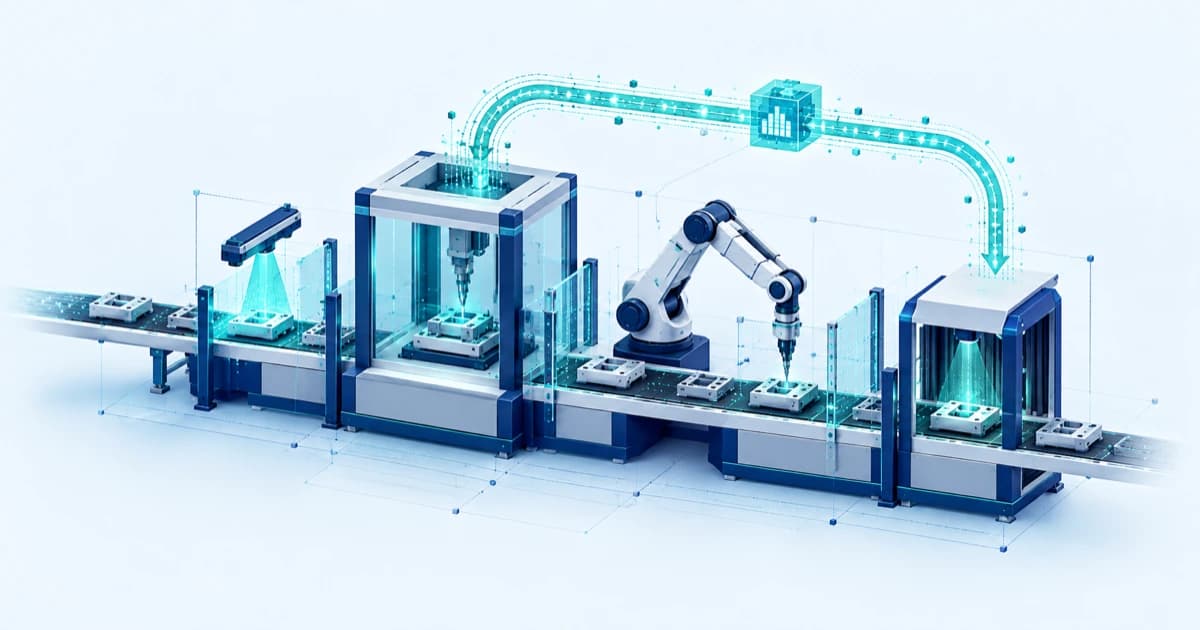
Industrial technology investors need evidence that a product can cross the gap between a promising prototype and a dependable operating system. For factory software, automation and hardware, that usually means understanding deployment, uptime, integration and the buyer’s economics. This guide compares 20 firms and provides a pilot-to-scale worksheet for a more useful first conversation.
The industrial label is broad. Define the production process, technical risk and economic buyer before researching investors. A pure software business, robotics platform and new manufacturing process can require very different capital and proof.
Compare the research starting points
Selection method: each entry has a first-party mandate, product page or identified primary transaction source supporting its relevance. This is a curated research map, not an exhaustive ranking or a statement that the firms are accepting every type of opportunity. Availability, check size and fit require current confirmation.
| Organization | Documented focus | Fit to confirm |
|---|---|---|
| Eclipse | Companies in the physical economy | Its current site describes support from idea to industrial scale. |
| Root Ventures | Seed-stage deep technology | The firm states it specializes in leading initial funding. |
| Construct Capital | Early-stage foundational industries | Manufacturing, logistics, defense and energy are named sectors. |
| HCVC | Industrializing scientific and technical progress | Its stated investment range is inception through Series A. |
| Momenta | Physical AI and industrial transformation | Its current positioning spans investment, growth and advisory work. |
| Ironspring Ventures | Early-stage industrial supply chains | Its site names manufacturing, construction, energy and logistics. |
| Aster | Deep-tech, industry and climate venture capital | Its stated focus is European startups from Seed through Series B. |
| Blackhorn Ventures | Software-centric digital infrastructure for physical industries | Seed and Series A; construction, energy, logistics and transportation. |
| Chrysalix Venture Capital | Industrial technology and resource-efficiency investing | Its portfolio includes industrial AI, inspection, manufacturing and robotics. |
| 8VC | Technology investment and company building across several industries | Manufacturing and logistics are named sectors alongside enterprise and defense. |
| DCVC | Deep-tech venture capital with industrial automation exposure | Its portfolio includes Agility Robotics and AIM Intelligent Machines. |
| Lux Capital | Science and technology venture investing with autonomous-manufacturing exposure | Its portfolio describes Hadrian’s factories for aerospace and defense manufacturing. |
| Playground Global | Early-stage deep-tech investing | Its stated areas include automation, materials, computing and AI. |
| AM Ventures | Venture capital dedicated to industrial additive manufacturing | Its scope covers materials, software, hardware and applications, from seed to growth. |
| UVC Partners | Technology venture investment with industrial robotics exposure | Its portfolio describes fruitcore robotics and other engineering-led businesses. |
| Innovation Endeavors | Early-stage technical investment across sensing, electrification, robotics and AI | Its current thesis explicitly includes the physical economy. |
| Anzu Partners | Industrial and life-sciences technology investment | Its company map includes advanced manufacturing, sensing and process-control businesses. |
| Emerald Technology Ventures | Sustainable industrial technology investment | Its stated sectors include automation, industrial AI, materials, energy and water. |
| IQ Capital | Deep-tech venture capital with robotics and engineering exposure | Its current site highlights Gravis Robotics, Nyobolt and other technical companies. |
| Piva Capital | Industrial technology investment from early through growth stage | Its stated interests include automation, industrial AI, additive manufacturing and supply chains. |
Read the mandate before requesting an introduction
Eclipse
Eclipse emphasizes experience with factories, hardware, supply chains and commercial milestones. Connect your technical progress to the operating system the company must eventually deliver.
Question to resolve: Which physical-economy constraint is the company removing?
Root Ventures
Its portfolio includes manufacturing insights, mechanical-engineering software and device infrastructure. A useful pitch explains why the technical problem is difficult and what evidence already exists.
Question to resolve: What engineering advantage survives outside the prototype environment?
Construct Capital
The current site includes industrial software and manufacturing companies. Avoid a generic automation pitch; identify the workflow, adoption burden and economics that make this a company rather than a feature.
Question to resolve: Who changes their operating process to adopt the product?
HCVC
The firm’s hardware-community roots and industrialization focus make the path from technical proof to manufacturable product important. Confirm the current vehicle and market fit.
Question to resolve: What is the next manufacturing or reliability milestone?
Momenta
The site describes sensing, industrial data, AI, secure compute and enabling hardware. Distinguish a venture investment discussion from advisory or commercial support.
Question to resolve: What real-world data and deployment rights make the system useful?
Ironspring Ventures
Explain the industrial handoff you improve and why buyers will change established behavior. Operator interest is useful evidence, but it does not by itself prove recurring adoption.
Question to resolve: What changes between one operator trial and a repeatable customer rollout?
Aster
Aster explicitly includes manufacturing, construction, energy and logistics in its industrial scope. A useful fit brief connects technical evidence to an industrialization plan and the buyer’s procurement process, instead of presenting a prototype as a finished operating product.
Question to resolve: Which industrialization milestone makes the next commercial deployment credible?
Blackhorn Ventures
Blackhorn’s current approach combines software business models with physical-world deployment. Explain the standard product, installation burden and operator benefit. A project requiring permanent bespoke engineering may have different economics from the stated asset-light approach.
Question to resolve: What is repeatable across customers, and what remains custom engineering?
Chrysalix Venture Capital
Chrysalix lists companies in adaptive equipment control, automated inspection and industrial sensing. Those examples are useful for understanding technical scope. Confirm the active vehicle and stage directly rather than infer a universal mandate from the full historical portfolio.
Question to resolve: What production data and reliability evidence support a site-to-site rollout?
Source: Chrysalix Venture Capital
8VC
8VC is broader than a factory-software specialist but explicitly includes manufacturing and logistics. Explain the industrial buyer and durable technical advantage, and identify the relevant team rather than assume all 8VC strategies evaluate the same stage or business model.
Question to resolve: Which manufacturing or logistics constraint creates the business opportunity?
DCVC
DCVC documents robotics and autonomous heavy-equipment businesses alongside a broad deep-tech portfolio. A useful industrial brief connects the technical advance to a specific operating task, reliability requirement and paying customer. Identify the commercial deployment evidence still missing.
Question to resolve: What task works reliably outside a controlled demonstration?
Lux Capital
Lux’s Hadrian entry provides a concrete advanced-manufacturing example, not a universal industrial mandate. Explain the production bottleneck, technical differentiation and qualification process. Check portfolio conflicts and customer-market fit before treating an adjacent investment as a signal of interest.
Question to resolve: Which manufacturing capability is defensible and repeatable across orders?
Playground Global
Playground describes an engineering-oriented approach to early-stage technical companies. An industrial pitch should connect the core invention to the difficult work of integration and commercialization. Show what has been tested and which technical risks the next round resolves.
Question to resolve: What first-principles advantage survives real operating constraints?
AM Ventures
AM Ventures is a specialist route for industrial 3D printing, not a general factory-technology fund. Explain where the product sits in the additive-manufacturing chain and which production economics it changes. Qualification, repeatability and downstream use matter alongside the novelty of the process.
Question to resolve: Which additive-manufacturing buyer can verify the production benefit?
UVC Partners
UVC’s company map documents investment in accessible industrial robot systems. A relevant brief explains the installation environment, operator requirements and repeatable customer value. Separate the prototype’s technical performance from the work needed to deploy and maintain it at customer sites.
Question to resolve: What must become standardized for the next ten installations?
Innovation Endeavors
Innovation Endeavors names both technical disciplines and physical-world applications. Show how the company combines those capabilities to change an industrial process. A strong explanation identifies the data, equipment and operating permissions needed rather than presenting AI as a sufficient business case.
Question to resolve: Which physical process becomes materially better because of the technical system?
Anzu Partners
Anzu documents a portfolio spanning engineering and production technologies. Prepare the industrial customer’s acceptance criteria and the transition from technical proof to repeatable supply. Distinguish a product company from a service business requiring permanent custom engineering.
Question to resolve: What qualification and supply milestones turn the technology into a repeatable product?
Emerald Technology Ventures
Emerald organizes its industrial work by sector and connects venture investing with corporate operating needs. Identify the relevant sector and product buyer. Show a measured operating benefit and a practical integration path before discussing access to a wider industrial network.
Question to resolve: Which sector team and operating buyer fit the first repeatable use case?
Source: Emerald Technology Ventures
IQ Capital
IQ Capital provides a starting point for businesses whose advantage rests on engineering rather than a thin software wrapper. Explain the proprietary technical capability, deployment setting and evidence needed to commercialize it. Portfolio examples support relevance, not a prediction of investment appetite.
Question to resolve: What technical proof and customer validation would make the next round credible?
Piva Capital
Piva focuses on technologies at a commercial inflection point. Explain the foundational capability, first market and scalable sales model. Make the deployment burden visible so the team can distinguish a repeatable platform from a sequence of bespoke projects.
Question to resolve: What is changing now that makes wider industrial adoption practical?
Write a pilot-to-scale evidence brief
| Decision | Evidence to prepare | Boundary |
|---|---|---|
| Technical readiness | Record tested conditions, failure rates and known limitations. | A successful demo is not a reliability guarantee. |
| Integration | Name systems, data access, installation and training required. | Separate standard setup from custom engineering. |
| Commercial adoption | Identify the budget owner, site champion and rollout authority. | A plant-level pilot may not authorize a global contract. |
| Scale economics | Explain manufacturing, service, support and margin assumptions. | Do not hide founder labor or field support in an idealized margin. |
Keep one row per candidate with the source URL, date checked, fit rationale, unresolved question, contact owner and next action. “Unknown” is a useful research status. Do not turn a portfolio example or a mutual connection into an assumed current mandate, available capital or permission to contact someone.
Worked example: a better first brief
Illustrative example: a machine-vision startup detects defects on one production line. Its next evidence brief includes the line speed, product variation, false-positive handling and manual inspection process. A second plant test is designed to reveal how much calibration is repeatable. That is more useful than reporting an accuracy percentage without conditions or implying that a single pilot proves universal factory readiness.
Questions to settle before outreach
- Which customer conditions make the product fail?
- What work must a human still perform during deployment?
- What changes in economics as the installed base grows?
Keep research connected to the next conversation
Use Finta to keep the relevant people, company context, source references and next action together. Ask Aurora to prepare a fit brief from the materials you provide or the authorized context available in your workspace. Review every factual assertion and the intended recipient before sending. Finta is not a promise of proprietary investor access, funding or transaction execution.
Try it with Aurora, Claude or Codex
Copy this prompt and add only material you are authorized to use. In Aurora, use the context available in your Finta workspace. Other assistants need the relevant inputs supplied separately.
Prepare a source-linked fit brief for the capital routes in this guide.
Our business and financing objective: [add a factual summary].
Use only the mandate pages and authorized materials I provide.
Compare: Technical readiness; Integration; Commercial adoption; Scale economics.
For every candidate, separate verified fit, unknowns, possible conflicts and one question to confirm.
Return a short research register and a draft next step.
Do not invent check sizes, investor interest, introductions or advice about transaction suitability.
Review the result against the original sources before acting. A generated draft is not an approval or a completed external action.
Sources and freshness
Mandates and primary sources reviewed October 28, 2026. Firm descriptions above cite their evidence individually. Suggested fit questions and worked examples are editorial analysis, not statements by the investors. Recheck the current team, vehicle, process and portfolio before outreach.
Related resources
Informational disclaimer
This content is for informational and educational purposes only and is not legal, tax, accounting, investment or other professional advice. We are not lawyers or accountants. Check with your attorney, accountant or other qualified adviser about your circumstances and any proposed transaction, disclosure or legal obligation.