
Startup valuation is the price framework used to negotiate a financing, not a single number that proves what your company will eventually be worth. A useful valuation conversation connects three things: the cash needed to reach the next milestones, evidence from comparable businesses, and the ownership changes created by the proposed terms.
This guide explains the concepts and gives you a worksheet for organizing the conversation. It does not recommend a valuation, an investment, or a legal structure for your company. Have qualified advisers review the actual financing documents and ownership model.
Start with the kind of valuation being discussed
In a straightforward priced equity round, pre-money valuation describes the negotiated value before new investment. Post-money valuation adds that investment. These financing terms are not the same as an independent appraisal of every asset or a guaranteed sale price. Carta explains the pre-money and post-money distinction.
Simplified relationship: post-money valuation = pre-money valuation + new investment.
For example, a hypothetical $2 million investment at an $8 million pre-money valuation produces a $10 million post-money valuation. In a deliberately simplified model, the new investment represents 20% of that post-money amount. This is arithmetic, not a recommended dilution target. Existing convertibles, an option-pool change, and other terms can change the ownership calculation.
Match the evidence to the business
Comparable-company analysis, projected cash flows, and asset-based analysis answer different questions. The inputs and assumptions matter as much as the method. Carta's overview of private-company valuation approaches describes how these approaches work.
- Early-stage company: organize evidence about the product, customer demand, team, and milestones alongside genuinely comparable financings. Mark missing financial history rather than treating a forecast as proven revenue.
- Revenue-generating company: show the definition, period, and source for revenue, growth, margins, and retention. A comparison becomes less useful when one company reports a different metric from another.
- Later-stage company: distinguish public-market context from the company's actual financing terms. A public cloud company's trading multiple is not an automatic price for an unrelated private startup.
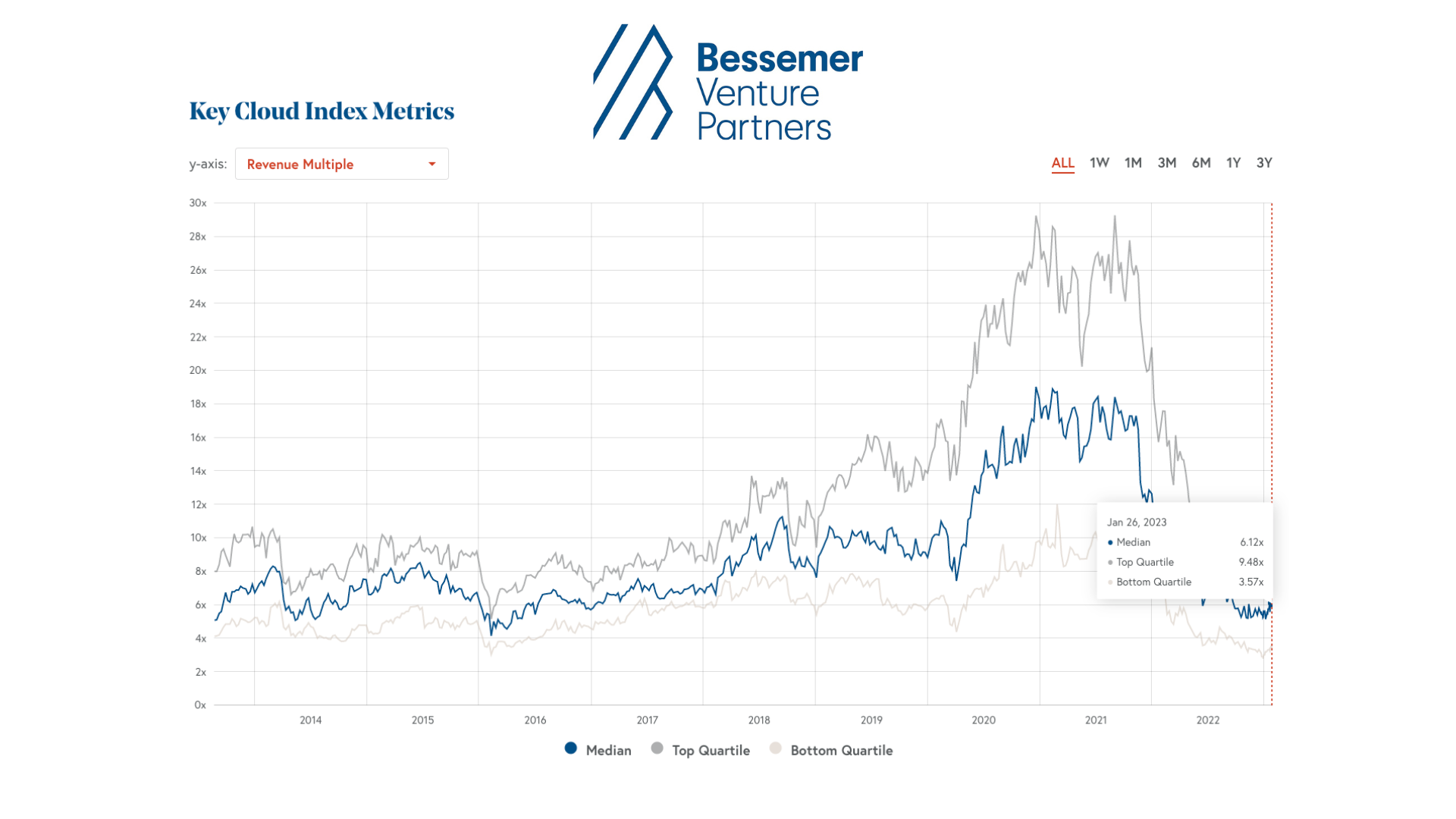
The BVP Nasdaq Emerging Cloud Index provides public cloud-company metrics, including forward revenue multiples and growth. Record the observation date and the companies compared. Do not carry forward a historical average as a current market rule.
A valuation conversation worksheet
Complete one version for each financing scenario. The goal is to make assumptions visible before discussing a headline number.
| Input | What to record | Question to resolve |
|---|---|---|
| Milestone plan | Deliverable, expected date, cost, and responsible owner | What becomes demonstrably different after the capital is spent? |
| Cash needs | Opening cash, expected receipts, spending plan, and downside scenario | What happens if revenue or the next financing arrives later? |
| Comparable evidence | Source date, business model, stage, geography, and metric definition | Why is each comparison relevant, and where does it break down? |
| Proposed terms | Investment amount, pre-money or post-money basis, and security type | Are all participants discussing the same instrument and denominator? |
| Ownership model | Current holdings, convertibles, proposed new shares, and pool assumptions | What changes when the complete scenario is modeled? |
| Open issues | Missing evidence, adviser questions, and decision date | What still needs verification before anyone signs? |
Keep SAFE caps separate from priced-round valuations
A SAFE is an agreement for future equity, not shares issued at the moment of investment. Its cap and any discount belong to the instrument's conversion mechanics. Do not compare a SAFE cap with a priced-round valuation without labeling the instrument and its terms. Y Combinator's SAFE resources explain the instrument and provide its current forms and guide.
Ask your advisers to model the actual agreements together. A sheet that shows only the latest check can miss the cumulative effect of earlier instruments.
Use historical charts as context, not today's pricing
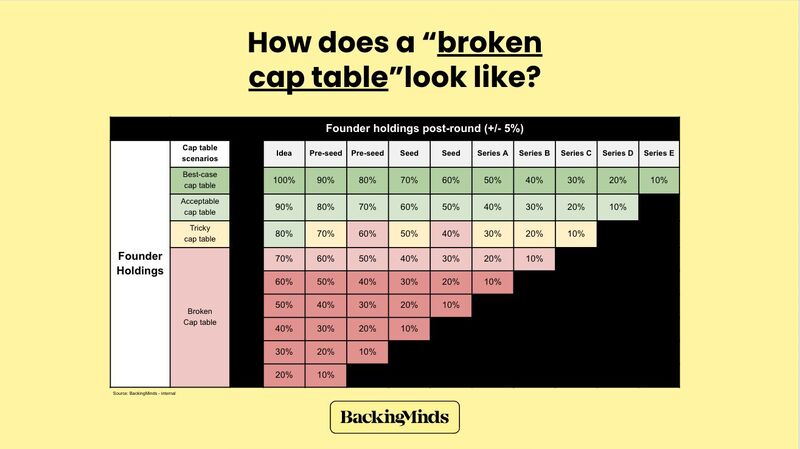
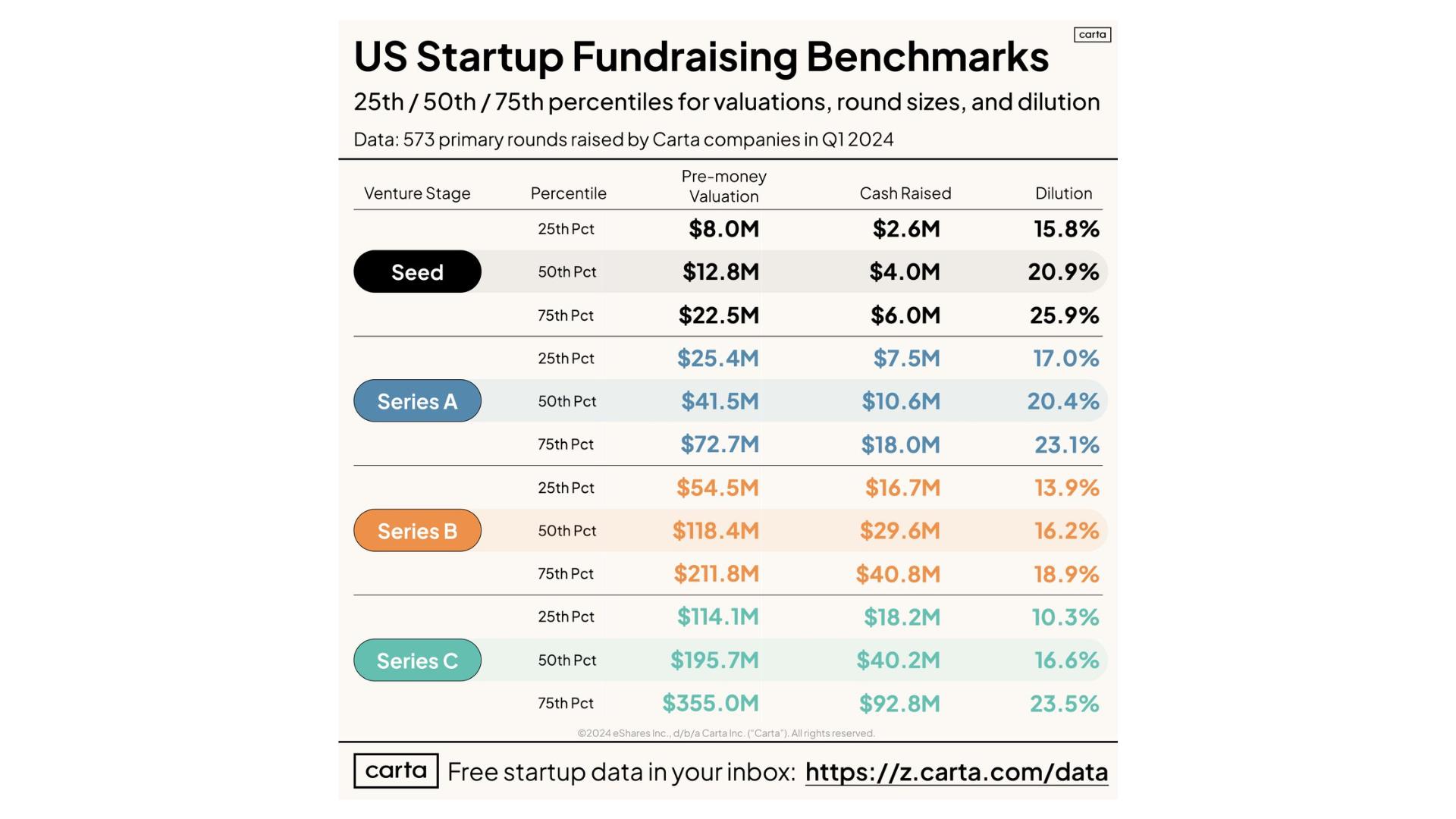
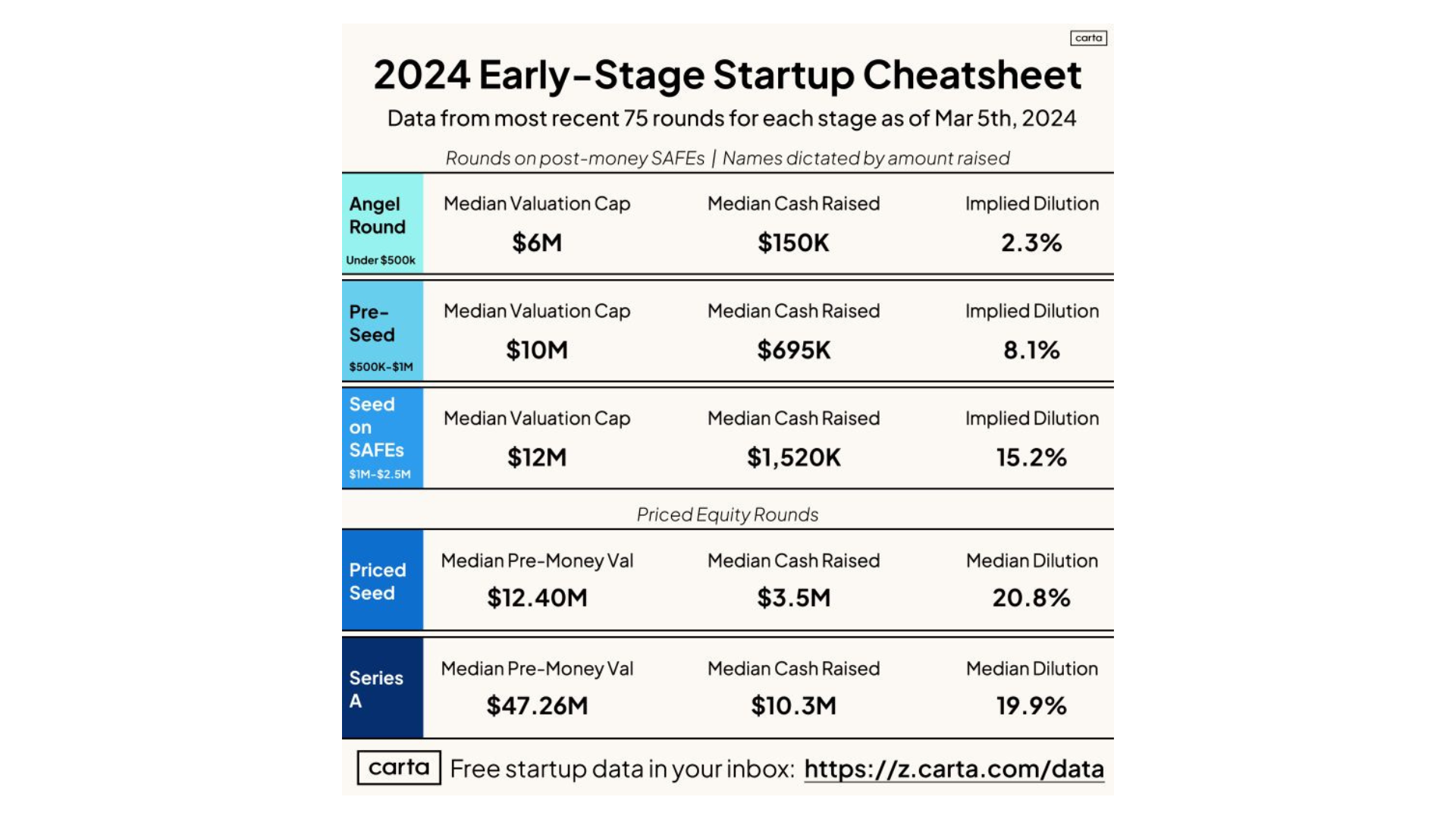
The figures below are retained from the original article. The valuation screenshots are historical 2024 material, not current benchmarks or recommendations. The original article linked to Peter Walker for Carta commentary. For the underlying period, consult Carta's Q1 2024 private-markets report and check the date and coverage of any newer data you use.
Prepare for the investor conversation
Bring a small, coherent evidence pack: the milestone budget, financial model, comparison notes, current ownership records, and the scenarios your advisers reviewed. Keep an issue list for assumptions the parties have not agreed on. Compare the full proposal rather than choosing solely by the highest headline valuation.
Finta's CRM can keep investor relationships and follow-up context organized. Finta Documents can hold your supporting files. These tools support fundraising organization; they do not replace an independent valuation or professional review of financing terms.
For more tools to organize your fundraising work, explore Finta.
Research updated: October 3, 2026. This is general educational information, not individualized financial, investment, tax, or legal advice.