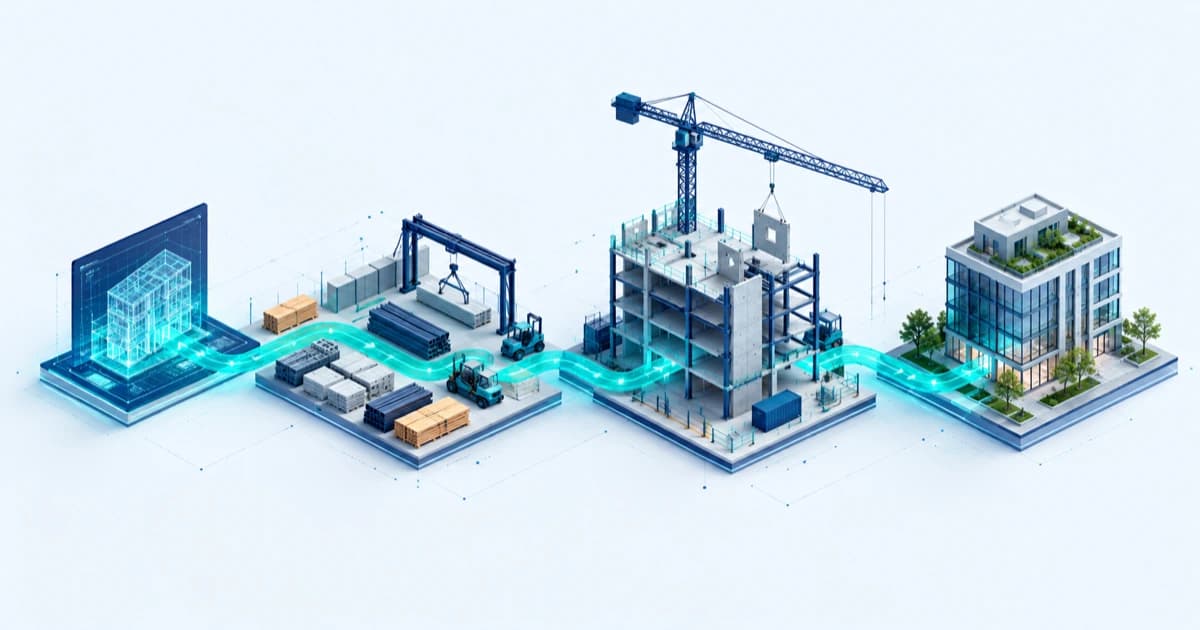
Construction technology investors need to understand more than the size of the construction market. They need to see who pays, how the product enters a project and whether it works under field conditions. The 15 firms below approach the built environment from different angles. Use the funding map to identify the right conversation before asking for an introduction.
This is a technology-equity research guide, not a list of construction loans or project-finance providers. Funding a software or hardware company is different from financing a building, a contractor’s working capital or a real-estate acquisition.
Compare the research starting points
Selection method: each entry has a first-party mandate, product page or identified primary transaction source supporting its relevance. This is a curated research map, not an exhaustive ranking or a statement that the firms are accepting every type of opportunity. Availability, check size and fit require current confirmation.
| Organization | Documented focus | Fit to confirm |
|---|---|---|
| Brick & Mortar Ventures | Software and hardware for the built environment | Architecture, engineering, construction and facilities management. |
| Building Ventures | Built-environment venture investing | Design, build, operate and experience. |
| Foundamental | AEC and the project economy | The firm states it invests from day zero and leads first institutional rounds. |
| Cemex Ventures | Corporate venture and open innovation | Investment, acceleration and commercial collaboration are distinct routes. |
| Ironspring Ventures | Early-stage industrial supply-chain technology | Construction is a stated focus alongside manufacturing and logistics. |
| Zacua Ventures | Built-environment entrepreneurs | The firm explicitly embraces early-stage companies. |
| Suffolk Technologies | Venture capital for the built environment | Construction, architecture, engineering, real estate and infrastructure. |
| Blackhorn Ventures | Digital infrastructure for construction and other industrial sectors | Its stated stage focus is Seed and Series A. |
| Nine Four Ventures | Early-stage PropTech across the built-world lifecycle | Pre-seed, Seed and Series A, with selective later-stage consideration. |
| Shadow Ventures | Construction and real-estate technology venture capital | Its portfolio includes construction robotics and automation. |
| 2150 | Venture capital for the built environment and physical economy | Its current scope includes energy, industry and materials. |
| Taronga Ventures | Real-asset technology investment through RealTech Ventures Funds | Its published portfolio covers the built-world asset lifecycle. |
| Nemetschek Group Ventures | Strategic investment in construction software | Its May 2024 company release documents participation in SmartPM’s Series A. |
| Hilti Venture | Construction software, AI, jobsite robotics and industrialized building technology | A strategic venture route tied to construction-industry use cases. |
| GS Futures, Future of Construction Fund | Early-stage built-environment technology investing | The fund states Seed through Series B and backing from GS E&C. |
Read the mandate before requesting an introduction
Brick & Mortar Ventures
Its mission explicitly covers emerging companies developing software and hardware across the building lifecycle. Explain the specific user and project workflow your product changes.
Question to resolve: Where does the product sit between design, site work and facilities operations?
Source: Brick & Mortar Ventures
Building Ventures
The firm organizes its scope around the full built-environment lifecycle. A pitch should identify whether value accrues to an owner, designer, contractor or operator, especially when someone else controls adoption.
Question to resolve: Are your buyer and daily user the same organization?
Foundamental
Its current thesis includes construction, infrastructure and heavy supply chains. Early technical ambition still needs a clear path to adoption in a project-based buying environment.
Question to resolve: What does the first repeatable deployment look like outside one friendly project?
Cemex Ventures
Cemex Ventures describes a global construction innovation focus. A corporate connection can be useful without becoming an investment. Keep program participation, a pilot and an equity commitment as separate milestones.
Question to resolve: Which route are you pursuing, and who approves each next step?
Ironspring Ventures
Its site emphasizes industrial adoption and operator relationships. Show how site evidence connects to the wider operating process instead of pitching a standalone dashboard without a buyer.
Question to resolve: Does the product change a costly operational handoff?
Zacua Ventures
Zacua’s current portfolio includes construction software, field-material workflows and robotics. Treat those as examples of scope, not proof that a competing company has room in the current portfolio.
Question to resolve: Are there portfolio conflicts or adjacent deployments to discuss?
Suffolk Technologies
Suffolk Technologies combines investment with access to an operating construction ecosystem. Its BOOST accelerator is a separate route with its own process. Show the deployment owner and evidence from the jobsite rather than assuming a pilot automatically leads to an investment.
Question to resolve: Are you seeking venture funding, a program place or a commercial test?
Blackhorn Ventures
Blackhorn emphasizes software-centric, capital-efficient approaches to physical industries, including the built environment. Explain how data or software changes an expensive field process, and separate that company-level case from the financing required for a particular building.
Question to resolve: Can the technology scale without proportional project-by-project custom work?
Nine Four Ventures
Nine Four explicitly includes develop-and-build workflows, contractors and vendors within a wider PropTech scope. It is more relevant when the product has a clear connection to those stakeholders than when construction is merely an adjacent market label.
Question to resolve: Which built-world buyer controls adoption and can validate the product?
Shadow Ventures
Shadow names construction and real estate as its focus and presents investments such as ICON, Lumina and AUAR. Use those examples to understand technical scope and potential portfolio conflicts, not to infer identical terms or appetite for a direct competitor.
Question to resolve: What construction bottleneck does the technology solve beyond an impressive demonstration?
2150
2150 explicitly includes the built environment within a wider physical-world thesis. A construction company should connect its product to a measurable building, material or infrastructure problem. Bring technical and commercial evidence together: a lower-impact material still needs a viable customer and route into projects.
Question to resolve: Which construction constraint makes this a technology investment rather than a single project?
Taronga Ventures
Taronga links technology investing with real-asset owners and operators. Its portfolio includes construction and material examples such as Hubble and CarbonCure. Identify the investment vehicle separately from RealTechX programs or advisory services, and explain how implementation would work in an owner’s operating portfolio.
Question to resolve: Which buyer and deployment path match the relevant RealTech fund?
Nemetschek Group Ventures
Nemetschek’s SmartPM announcement provides a dated example of its construction-software investment activity. Explain the independent company opportunity alongside potential ecosystem integrations. Confirm the current venture team and mandate directly; a historical transaction supports relevance, not a claim of available capital or a guaranteed distribution partnership.
Question to resolve: How does the product complement the ecosystem while remaining commercially viable on its own?
Source: Nemetschek Group Ventures
Hilti Venture
Hilti Venture combines direct investment with startup partnerships. Its stated focus makes field validation important: explain the crew, workflow and operating conditions in which the technology creates value. Keep a technical trial, a commercial agreement and an equity decision as separate milestones.
Question to resolve: What jobsite evidence would justify a wider deployment?
GS Futures, Future of Construction Fund
The dedicated construction fund names digitization, robotics, automation and physical AI. Show how the product improves project delivery or real-asset operations, and specify the field test needed next. The strategic operating footprint can inform a fit discussion, but it does not establish a committed customer.
Question to resolve: What must a field deployment demonstrate before expansion?
Source: GS Futures, Future of Construction Fund
Turn a site pilot into investable evidence
| Decision | Evidence to prepare | Boundary |
|---|---|---|
| Buyer map | Identify the budget owner, field champion, procurement owner and beneficiary. | A general contractor’s enthusiasm may not authorize a site-wide rollout. |
| Deployment burden | Record training, installation, connectivity and change-management needs. | A pilot that requires constant founder support may not yet be repeatable. |
| Measured result | Define the baseline and the same task after deployment. | Separate estimated savings from observed time or cost changes. |
| Expansion path | Explain the next project, customer or subcontractor group. | A project win does not establish company-wide retention. |
Keep one row per candidate with the source URL, date checked, fit rationale, unresolved question, contact owner and next action. “Unknown” is a useful research status. Do not turn a portfolio example or a mutual connection into an assumed current mandate, available capital or permission to contact someone.
Worked example: a better first brief
Illustrative example: a materials-coordination tool reduced missing-item incidents on one project. Before claiming a scalable product, the founder collects the original incident log, the measurement period and the project manager’s permission to cite it. The next test uses a second site with a different manager. The investment brief identifies what is repeatable and what still depends on the founder being on site.
Questions to settle before outreach
- Who can authorize deployment on the next site?
- Does the economic buyer receive the benefit you measured?
- Which implementation burden becomes smaller with every deployment?
Keep research connected to the next conversation
Use Finta to keep the relevant people, company context, source references and next action together. Ask Aurora to prepare a fit brief from the materials you provide or the authorized context available in your workspace. Review every factual assertion and the intended recipient before sending. Finta is not a promise of proprietary investor access, funding or transaction execution.
Try it with Aurora, Claude or Codex
Copy this prompt and add only material you are authorized to use. In Aurora, use the context available in your Finta workspace. Other assistants need the relevant inputs supplied separately.
Prepare a source-linked fit brief for the capital routes in this guide.
Our business and financing objective: [add a factual summary].
Use only the mandate pages and authorized materials I provide.
Compare: Buyer map; Deployment burden; Measured result; Expansion path.
For every candidate, separate verified fit, unknowns, possible conflicts and one question to confirm.
Return a short research register and a draft next step.
Do not invent check sizes, investor interest, introductions or advice about transaction suitability.
Review the result against the original sources before acting. A generated draft is not an approval or a completed external action.
Sources and freshness
Mandates and primary sources reviewed October 28, 2026. Firm descriptions above cite their evidence individually. Suggested fit questions and worked examples are editorial analysis, not statements by the investors. Recheck the current team, vehicle, process and portfolio before outreach.
Related resources
Informational disclaimer
This content is for informational and educational purposes only and is not legal, tax, accounting, investment or other professional advice. We are not lawyers or accountants. Check with your attorney, accountant or other qualified adviser about your circumstances and any proposed transaction, disclosure or legal obligation.