Where can you find a lender to buy a business?
Start with lenders that explicitly publish a business-acquisition financing route, then test whether they cover your buyer profile, target business and transaction. This guide lists 15 starting points and provides a practical evidence worksheet for a first purchase. It is not a ranking of the cheapest or easiest lenders.
A lender may like the industry but not the purchase structure. It may finance an established operator but not the buyer's particular experience. It may offer an SBA product without being able to use it for this deal. Getting those distinctions into the first conversation saves your team from building an application around an assumption.
The SBA's 7(a) program includes changes of ownership among its uses. Participating lenders still evaluate the request, and current program rules and transaction details matter. An SBA guarantee supports the lender; it is not a business-purchase approval.
Compare three evidence tracks before comparing lenders
| Track | Information to organize | Question for the lender |
|---|---|---|
| Buyer | Ownership, relevant operating experience, personal records requested through a secure channel, proposed contribution and existing obligations | What buyer evidence do you need to evaluate this request? |
| Target | Historical financial statements, tax records, revenue sources, customer concentration, operating assets and known information gaps | What operating history and verification work do you require? |
| Transaction | Purchase documents, requested uses, property or inventory involved, seller participation if proposed, timing and unresolved terms | Which parts of the transaction can your product evaluate? |
Keep the buyer's requested structure separate from a lender's proposal. An asking price is not a lender-approved value, a draft purchase agreement is not a closed transaction, and a conversation about seller financing is not an agreed source of capital.
Use the worksheet to identify missing records and the person responsible for each answer. Legal, tax, valuation and financing questions belong with the relevant advisers and providers. The worksheet organizes the discussion; it does not resolve those questions.
15 business-acquisition lending starting points
Each provider below published an acquisition-related financing route at our October 2, 2026 research review. The final column is an original first-conversation question, not a claim about underwriting. Order is editorial, not a recommendation.
| Provider and source | Published route | First question |
|---|---|---|
| Live Oak Bank | Dedicated acquisition-loan route | What borrower and target records should accompany the first conversation? |
| Byline Bank | Search-acquisition financing | Do you work with a first-time, self-funded search buyer in this industry? |
| Newtek | Term loans with acquisition uses | Which Newtek lending entity and product would evaluate this purchase? |
| Huntington | SBA acquisition financing | Who is the acquisition specialist for this location and transaction? |
| First Internet Bank | SBA business acquisition and partner buyout | How do you distinguish an acquisition from a partial ownership buyout? |
| Pursuit | Existing-business, franchise and partner purchase | Which current product serves this business and geography? |
| Celtic Bank | Dedicated business-acquisition route | What target operating history and buyer experience do you need? |
| Ready Capital | Government-guaranteed acquisition financing | Which team would review this transaction and its requested uses? |
| United Midwest Savings Bank | Acquisition financing including professional businesses | Does your team cover this business model and purchase size? |
| Dogwood State Bank, a Division of TowneBank | Dedicated acquisition lending | Which current lending entity will issue and service the proposal? |
| Atlantic Union Bank | SBA and government-program lending | Who can discuss the ownership-change request and required evidence? |
| First Citizens Bank | SBA term loans with acquisition uses | Which parts of the purchase can your proposed product evaluate? |
| Wintrust | SBA financing for a business purchase | Which bank and acquisition contact should the buyer approach? |
| TD Bank | SBA programs including business acquisitions | Does this target location fit your current lending territory? |
| PNC | SBA financing with acquisition uses | What additional transaction details are needed before a term discussion? |
These are providers to investigate, not interchangeable offers. Several are banking groups with multiple operating entities. Count a group once during discovery, then record the exact entity named in the eventual application or proposal. Dogwood's current page identifies its TowneBank division branding; do not treat the two names as separate sources of committed financing.
Make the first conversation specific
Send a short description of the business, location, requested use and transaction stage before transmitting a large diligence folder. Ask whether the lender has a relevant acquisition team and which secure channel it uses for sensitive records.
- Are you currently considering purchases in this industry and geography?
- Can you evaluate a first-time buyer with this operating background?
- Which product and lending entity would review the request?
- What buyer, target and transaction records are required?
- Which parts of the proposed uses remain outside your scope?
- What has to happen before the next review, and who owns that step?
Do not compare an indicative discussion from one lender with a documented proposal from another as though they were the same stage. Record whether a number is requested, indicative, proposed, approved or funded. That simple status field makes the pipeline more useful than a spreadsheet of attractive logos.
Synthetic example: a first-time HVAC business buyer
Synthetic example: an operator is considering the purchase of an HVAC business. The target has several years of operating records, a vehicle fleet and customer contracts. The buyer has relevant experience but has never completed an acquisition.
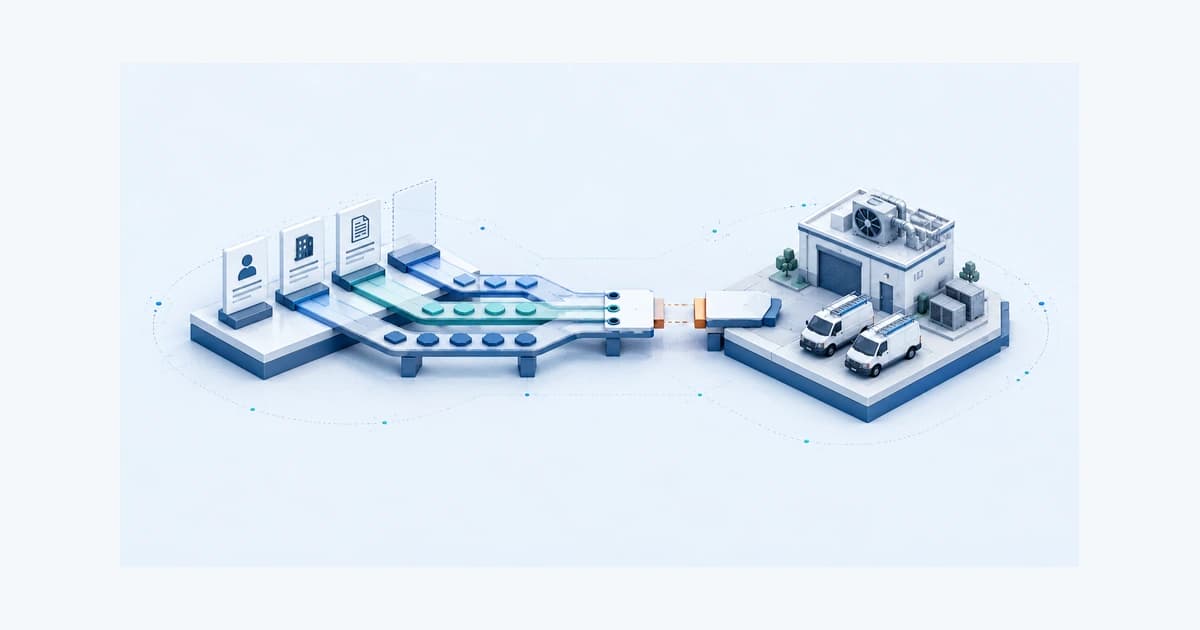
The buyer creates three evidence tracks. The buyer folder holds the experience summary and requested personal records. The target folder separates supplied financial statements from figures that still need verification. The transaction folder records the proposed purchase, requested working capital and unresolved treatment of certain assets.
Two lenders publish acquisition routes, but neither has assessed the deal. The buyer asks one whether its team covers HVAC transactions and asks the other whether the requested uses fit its current product. One requests additional target records. The other asks for a clearer transaction summary. The pipeline records both responses without calling either financing committed.
The useful result is a lender-fit map: relevant contact, confirmed scope, evidence outstanding and next review. There are no invented rates, contribution requirements, closing dates or approvals in this example.
Keep the purchase process connected
Use a CRM to connect the lender, buyer, target, advisers and open requests. A concise follow-up can reference the exact records the lender asked for, rather than restarting the acquisition story in every email. Aurora can help prepare a summary or draft from the available context for your team to review.
The team remains responsible for the purchase decision, adviser instructions and application. Keeping a conversation organized is useful without pretending software has underwritten the business.
Methodology and limitations
Finta reviewed the linked provider pages and SBA source on October 2, 2026. Inclusion required an explicit acquisition-related route, not only general small-business lending language. This is a selected directory, not a complete market census or endorsement. Published uses do not establish current intake, jurisdiction, buyer qualification or an offer. The evidence worksheet and HVAC example are original educational tools. Confirm current program rules and transaction-specific terms with the provider and appropriate advisers.