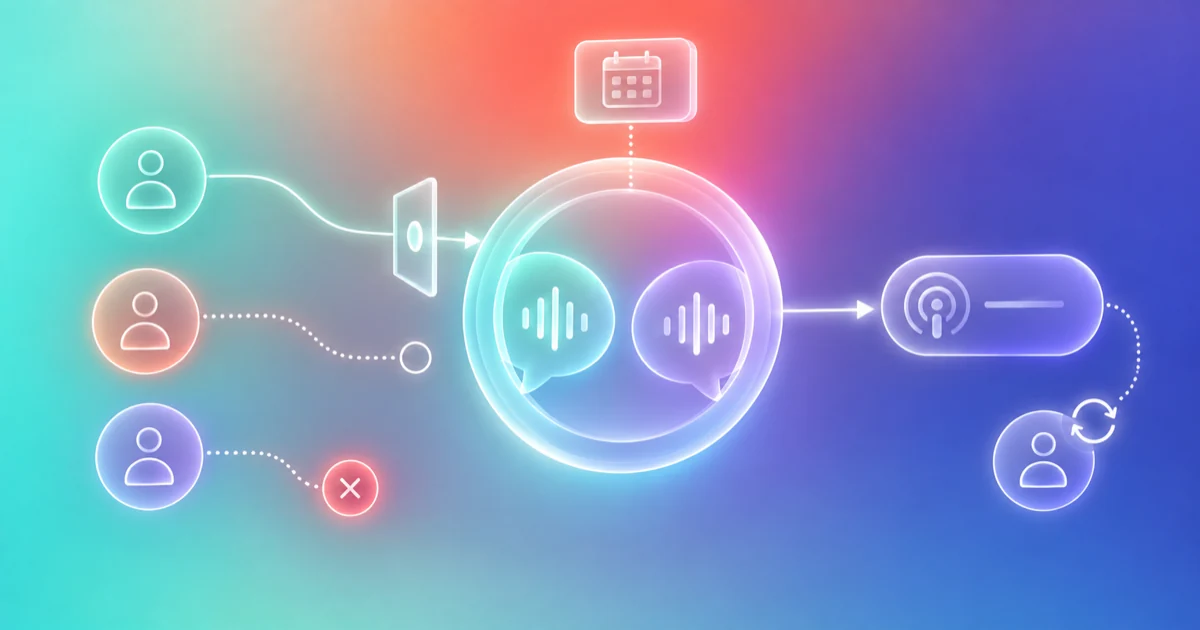
Podcast guest booking works better when the episode idea, relevant guest, invitation, preparation, and follow-up stay connected. A large contact list is less useful than a small shortlist with a clear reason for each conversation.
Use the guest-fit worksheet and message templates below to organize the process. Aurora can help research supplied sources, prepare a brief, and draft useful outreach for review. The host still chooses the guest, agrees on the scope, and approves communication.
Begin with the conversation your listeners need
Write an episode brief before searching for names:
Our listeners are [audience]. This episode helps them understand [specific question]. We need a guest with direct experience in [relevant situation], who can explain [useful example or decision].
For a founder-focused show, that might be a conversation about choosing the first sales hire, preparing a fundraising process, or supporting portfolio companies. Choose the job first; audience fit is more useful than a recognizable name with no connection to the episode.
Build a guest-fit shortlist
| Field | What to capture |
|---|---|
| Person and role | Current, verified role and organization |
| Relevant experience | The work that connects them to the episode question |
| Primary source | Their own article, talk, project, or official biography |
| Episode angle | One specific conversation, not their entire career |
| Prior interaction | Actual relationship context, if any |
| Contact route | Published route or a permissioned introduction |
| Open question | What you still need to confirm |
| Next action | Research, request introduction, invite, wait, or close |
Do not turn a possible mutual connection into an introduction that has already happened. Ask the relationship owner whether they are comfortable helping before using their name in the invitation.
Copy this podcast invitation
Subject: A conversation about [specific topic] for [show]
Hi [name],
I host [show] for [audience]. Your [specific public work] raised a useful question about [topic], and I would like to explore it with you.
The proposed conversation is [format and duration], focused on [two useful questions]. [Accurate recording and publication details].
Would this be interesting? I can send the outline first, and there is no problem if the timing or topic is not a fit.
[Host]
Use real information about the show. Do not invent listener numbers, imply an endorsement, or claim familiarity based on an AI-generated summary.
If you do not have audience metrics yet, explain the audience you are trying to serve and the conversation you want to create. A specific, honest invitation can still be compelling.
Agree on the preparation and recording plan
Once a guest is interested, confirm the format, date, time zone, expected duration, recording method, publication plan, and any agreed boundaries. Clarify whether the discussion is recorded and how the guest's name, image, and contributed materials will be used. Follow applicable requirements and your show's policies rather than treating a generic checklist as legal advice.
| Preparation item | Confirmed answer |
|---|---|
| Episode purpose | The question listeners will understand better |
| Logistics | Date, time zone, duration, and joining details |
| Public introduction | Guest-approved name, role, and biography |
| Questions | A focused outline and any agreed exclusions |
| Materials | Permission to use specific images or documents |
| Recording and publication | Agreed format and expectations |
| Follow-up owner | Person responsible for next steps |
Keep an interested response separate from a confirmed booking. A guest may like the idea without having agreed to the date.
A worked episode-preparation example
This is a fictional illustration, not a Finta customer result.
An early-stage founder show wants to explore the first sales hire. The host selects a founder whose own public article describes the transition from founder-led sales. Instead of asking for a general career interview, the invitation proposes three decisions: when the team felt ready, what the founder expected the hire to own, and what changed after the first month.
The preparation brief separates the article's reported facts from questions the host wants to ask. It does not invent a revenue result or imply that the guest endorses the host's products. The result is a more focused conversation, not a promised increase in downloads.
Give Aurora a guest-preparation assignment
Use this episode brief and these public or approved sources to compare the guest candidates. Explain fit using source links, separate verified facts from open questions, and suggest a specific episode angle for each person. Draft one invitation and a short preparation outline for review. Do not infer a relationship, invent audience metrics, contact anyone, or confirm a booking.
Aurora can organize supplied information and supported connected context. Use Finta CRM to keep guest relationships, notes, approved materials, and next actions together. This is a suggested responsibility, not a claim that a preinstalled podcast agent or recording-platform integration is included.
Close the loop after the conversation
Record the actual status: invited, interested, confirmed, recorded, published, declined, or postponed. Keep the distinction visible so a team member does not send an invitation to someone who is already booked.
Thank the guest and follow through on agreed materials or publication updates. Save corrections with the relevant episode context. Ask separately before using a private statement as a quote, testimonial, or endorsement.
For the next conversation, use the meeting-prep workflow. The broader AI outreach teammate guide helps keep contextual outreach moving without turning every relationship into a bulk campaign.